In one district of Nigeria’s Borno State, only 56 of 113 primary schools are still open after two mass abductions of children this year. Families across the north-east are selling livestock and taking loans to pay ransoms, and Amnesty International says at least 1,100 people were kidnapped nationwide in four months.
Kidnapping in north-eastern Nigeria is draining families’ savings and closing schools, according to a report from Maiduguri by Al Jazeera.
Schools Closing
In the Askira-Uba area of Borno State, only 56 of 113 primary schools are functioning, said Fasuma Askira, the local government’s education secretary.
Before an attack in May, 76 were open. The threat of violence then forced the authorities to close another 20.
Two Attacks on Children
- May 15, Mussa: suspected rebel fighters abducted dozens of children. A register identified 40 missing; the Borno State government has more recently referred to about 44 still missing.
- June 29, Lassa: armed rebels attacked a government secondary school while students were sitting national examinations. Some were recovered, but 36 students and a teacher are reported to remain in captivity.
Junior secondary students from Mussa have been moved to a government boarding school in Uba. Soldiers and community vigilantes have been deployed in both places.
What It Costs Families
Across the region, families sell livestock, take loans, dispose of property and use up their savings to pay ransoms.
Laraba Dauda, 45, said her younger sister was abducted on January 13 on the Biu–Buratai road and managed one phone call from captivity.
“Aunty, unknown people have kidnapped us and taken us somewhere in the bush,” her sister said. “Please just help me with your prayers.” She has not come home.
“We need the government to come to our aid and help rescue our relatives who have spent more than six months in captivity,” Dauda said.
A National Problem
Amnesty International Nigeria says at least 1,100 people were abducted across the country between January and April 2026. It warns the true figure could be considerably higher, because many incidents in remote areas are never reported.
“Apart from killing people, gunmen are now on a rampage of abductions, largely for lucrative ransom,” said Isa Sanusi, the organisation’s director in Nigeria.
Amnesty says victims can face torture, starvation and sexual violence, and that fear of abduction is pushing children out of school.
The Government’s Response
Usman Tar, Borno State’s commissioner for information and internal security, said the state is using both military and non-military measures, including support for the armed forces, civilian volunteers and drones with thermal cameras.
“This has enabled us to dominate the hotspot axis,” he said, adding that attacks had fallen in some areas.
He said officials had visited affected families and that financial assistance is provided through the state’s emergency and humanitarian agencies.
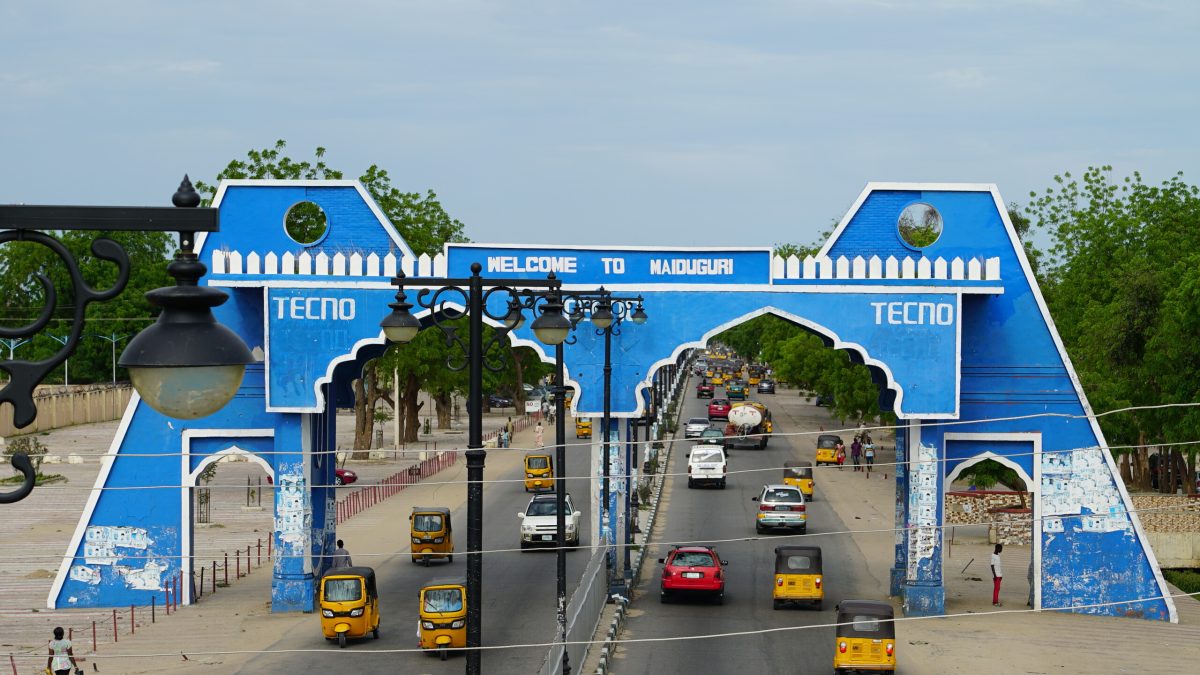
Image: The city gate of Maiduguri, capital of Borno State (file photo, 2019). Photo by Ifeatu Nnaobi via Wikimedia Commons, CC BY-SA 4.0.