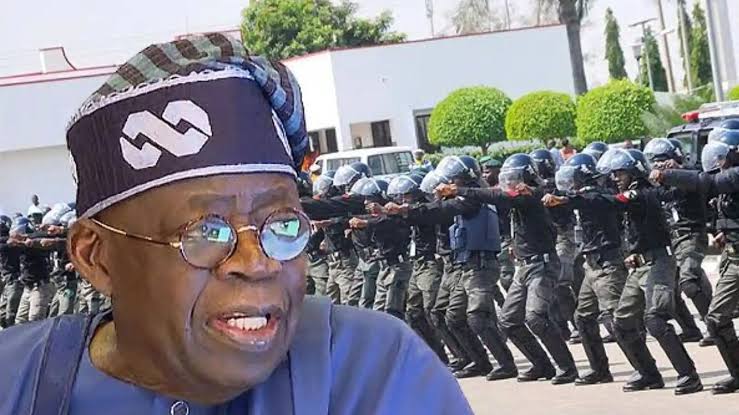
Nigeria has moved a step closer to introducing a state police system after all 36 states approved a motion to create and operate their own police forces alongside the federal police. The resolution, which amends the constitution, now needs the assent of President Bola Tinubu to become law, and further federal and state legislation will be required before any state police force can become operational. The development, reported by the BBC, comes as the country continues to battle banditry, mass kidnappings and communal violence that federal security forces have struggled to contain.
The scale of the approval is notable. The Clerk to the National Assembly, Kamoru Ogunlana, said his office had completed the verification of resolutions submitted by state legislatures in support of the amendment. He described the unanimous backing as 100% approval, well above the legal requirement of at least 24 states. In a country where constitutional change is rarely quick and often politically contested, that kind of cross-state consensus signals how widely the current system is seen as inadequate.
Nigeria today has a centralised police system. Under the 1999 Constitution, the federal government controls the police, which means that even a governor, who is the chief executive of a state, cannot direct the officers who patrol it. Supporters of state police argue that this arrangement is poorly suited to a country of more than 200 million people. Decentralising law enforcement, they say, would allow authorities to respond quickly to security threats and to better understand local conditions, including languages, terrain and community networks that a federal officer posted from elsewhere may not know.
The amendment proposes a two-tier model. The federal police would retain responsibility for enforcing federal laws and protecting national institutions, and for tackling threats such as terrorism, cybercrime and border security. State police would be responsible for enforcing state laws, maintaining public safety, and preventing and investigating offences within their jurisdictions. The federal police could still intervene in a state on some occasions, including a serious breakdown of public order or human rights violations. Any such intervention would require presidential authorisation and would be subject to judicial review.
Because the fear most often voiced about state police is political abuse, the proposed law includes safeguards. Governors would be prohibited from ordering officers to unlawfully arrest or detain individuals or groups. Independent state police commissions would oversee hiring, discipline and accountability, and their officials would be appointed by governors on the recommendation of the federal National Police Council. Those provisions are intended to limit political interference, but how well they work will depend on the detail of the enabling legislation and on whether the commissions are truly independent in practice.
Critics are not persuaded that the safeguards are enough. The BBC reports that opponents fear governors could use the forces to intimidate political opponents, suppress dissent or influence elections. Nigeria has a history of state governments commanding other security bodies and local militias, and rights groups have long warned that giving governors armed officers with arrest powers could deepen political rivalries at state level. The concern is sharper because the new forces will be built on a police service that rights groups already describe as facing a shortage of officers, who are often poorly equipped, inadequately trained and vulnerable to corruption.
There is also a practical question of money and capacity. Creating 36 new police forces, with recruitment, training, equipment, pay and oversight bodies, is a large undertaking. The BBC's report notes that further federal and state legislation will be needed, so the amendment is a starting point and not an operational reform. States differ greatly in their revenues, and richer ones may be able to build capable forces far faster than poorer ones, which raises the possibility of a patchwork in which security quality depends on a state's budget. The amendment as described does not, in the material reported, say how those gaps would be handled.
The security case remains the main driver. Banditry, mass kidnappings and communal violence have affected large parts of the country, and communities in affected areas have repeatedly said that the response from distant federal units is too slow and too little. State governors, who are held politically responsible for insecurity but lack control over the forces meant to prevent it, have been among the strongest advocates for reform. The unanimous vote by state legislatures reflects that frustration, and it puts pressure on the presidency to act.
The scale of the vote also carries a political message. Unanimity across 36 states, each with its own party politics and its own governor, is unusual, and it suggests that the demand for local policing cuts across party lines. Governors are the officials most visibly blamed when kidnappings or attacks occur in their states, yet under the present arrangement they cannot direct the officers charged with preventing them. The amendment would change that, which helps explain the enthusiasm at state level. It also explains the unease among critics, who worry that the same governors could use the new forces for political ends.
The next steps are clear but not guaranteed. President Tinubu must give his assent. After that, the National Assembly and state assemblies will have to pass the laws that define how state police are recruited, funded, armed and supervised, and how they coordinate with the federal force. The design of those laws will decide whether the reform improves security or creates new problems. Questions about command, jurisdiction when crimes cross state lines, and the process for the federal police to intervene will all need to be written into law in detail.
For Nigerians living in areas hit by violence, the promise of state police is a promise of faster response from officers who know the ground. For critics, it is a risk that powerful politicians will gain a tool for settling scores. Both views can be true at the same time, and the safeguards written into the amendment are an attempt to reconcile them. The coming months, as the president decides and lawmakers draft the follow-on legislation, will show whether Nigeria can build a two-tier system that is both more responsive and accountable, or whether the constitutional victory will stall at the stage of implementation.