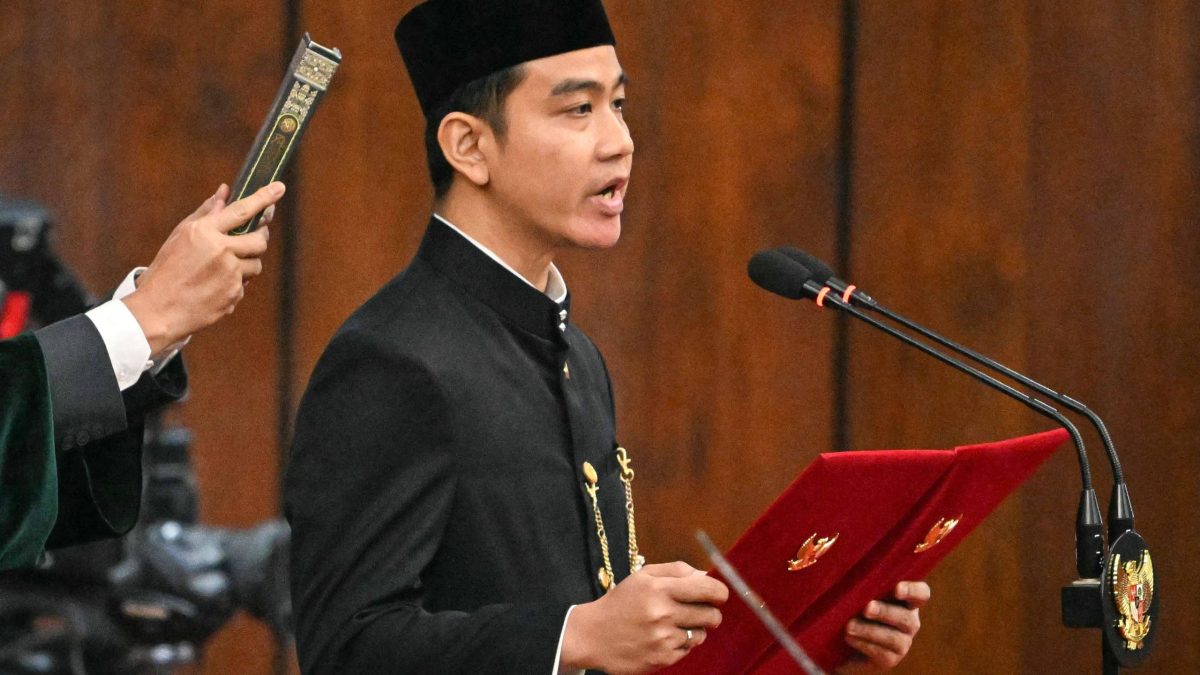
Indonesia's Vice-President Gibran Rakabuming Raka has submitted his resignation, an aide told the BBC on Wednesday, in a move that could strain the alliance that carried President Prabowo Subianto to power. The resignation followed a Supreme Court ruling that a high-school document Gibran used in the 2024 election campaign was invalid. The decision prompted more than 100 lawmakers to back a parliamentary initiative that could have opened impeachment proceedings. It remains unclear whether Prabowo has accepted the letter, which aide Budi Arie said was handed directly to the president.
The case that resignation was the right step is built on the court findings. Indonesian law requires a vice-president to have completed senior secondary school or its equivalent. Having studied in Singapore and Australia, Gibran relied on an Indonesian equivalence certificate, but the Supreme Court said no evidence showed he held a foreign diploma that could serve as the basis for equivalency. It also considered a Constitutional Court ruling from earlier in October that reached the same conclusion. With more than 100 lawmakers ready to support a path towards impeachment, resigning spares the country a drawn-out constitutional fight. Gibran's route to the ticket was also controversial from the start. He was 36 in 2024 and became eligible only after a Constitutional Court ruling exempted him from the minimum age of 40, so critics see accountability on his qualifications as long overdue.
The counter-argument is that the picture is less clear than a clean resignation suggests. It is still unconfirmed whether the president has accepted the letter. On Tuesday, the day before he submitted it, Gibran asked for the chance to challenge the ruling and prove the legitimacy of his credentials, according to State Secretary Prasetyo Hadi, and he had long argued that his university education was sufficient proof that he completed senior high school. His supporters can say he never had a chance to answer the finding in full. The timing also raises questions about motive. The resignation comes as relations between Prabowo and his predecessor Joko Widodo, known as Jokowi, appear to be fraying, with the president reshuffling Jokowi loyalists and arresting and then sacking his chief of staff, Listyo Sigit Prabowo, over suspected wiretapping. Some will see the ruling as part of that power struggle rather than a neutral legal judgment.
For Indonesia, the stakes go well beyond one office. Prabowo's government is facing a free school meals programme struggling for funding, the country's worst wildfires in a decade and a stock market in crisis amid allegations of widespread manipulation. On Tuesday, students across the country demonstrated over the handling of corruption and the environment. A vice-president's exit and a possible break between the two most powerful men in the country add political instability at a time when investors and ordinary Indonesians are looking for steadiness.
Gibran's resignation closes one question about his eligibility and opens another about the stability of the governing alliance. If Prabowo accepts it, attention will turn to who replaces him and what it means for his relationship with Jokowi.