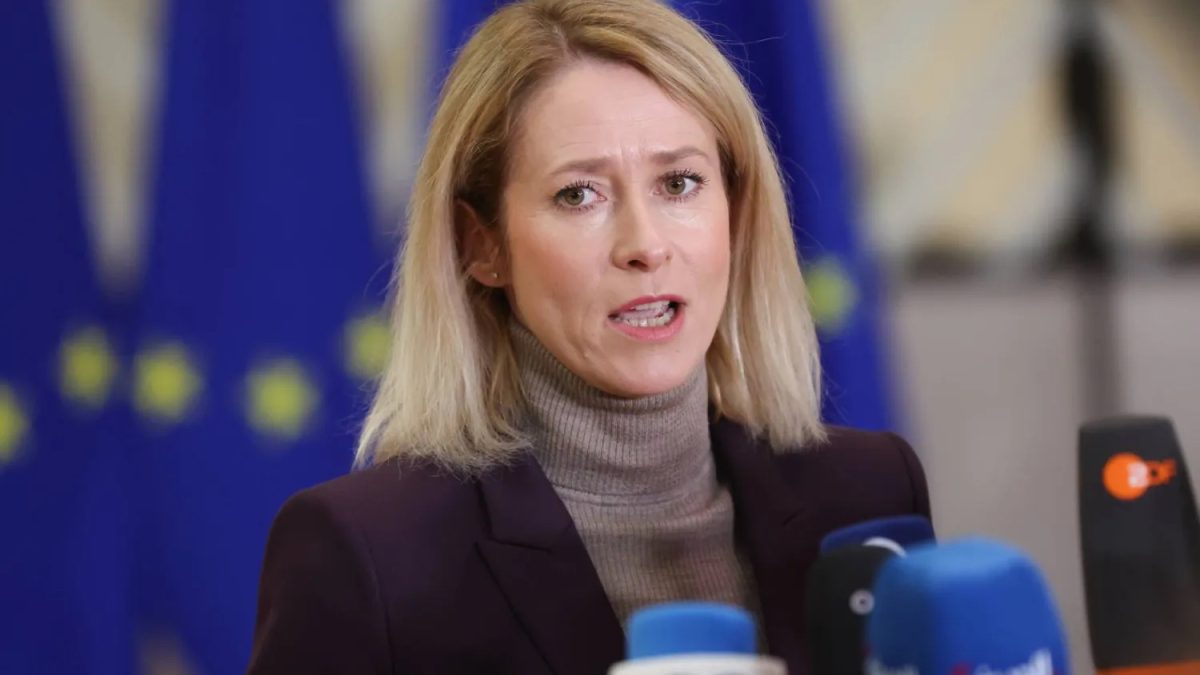
European Union foreign ministers have agreed to revive a nearly 20-year-old cooperation deal with Syria, as the bloc presses to strengthen ties with the war-scarred country following the fall of the Assad government. EU foreign policy chief Kaja Kallas said on Monday that "Syria needs investment and a successful transition", and that the aim is "to give Europe and Syria a framework for trade, political dialogue and closer cooperation as soon as possible". The decision, reported by Al Jazeera, was taken at a meeting of foreign ministers in Brussels.
The EU-Syria association agreement was first made in 2008, under then-President Bashar al-Assad, but was never fully signed by either side because of concerns about the Assad government's human rights record. Kallas said ministers "supported moving ahead" with that deal and with launching talks for an updated one. Diplomats will now work through the technical and legal details to finalise an agreement that would create a framework for free trade, political dialogue and broader cooperation between Brussels and Damascus.
A discussion paper prepared by the bloc's diplomatic service ahead of the meeting outlined what Al Jazeera described as one of Brussels' most ambitious efforts yet to normalise ties with Syria, less than two years after Assad's fall. The reasoning, as Kallas put it, is strategic: "Everybody said that we need to engage with Syria because if we don't engage, then this vacuum will be filled by other players." The phrase reflects a concern shared by many European governments that a disengaged Europe would leave space for other powers to shape Syria's future.
At the same time, the EU intends to attach conditions. Kallas said Brussels would set out new conditions for Syria to secure an updated deal. "We should have clear conditionality regarding human rights," she said. She also said the EU wants Syria to stop recognising occupied Ukrainian and Georgian territories, which had been recognised under the Assad government. The latter condition shows how Syria's foreign policy alignments, which under Assad included close ties with Russia, have become part of the European calculation, and it links the Syrian file to Europe's priorities in Ukraine and the Caucasus.
The move is the latest in a series of steps. The EU removed its sweeping sanctions on Syria's economy in 2025 in an effort to help its recovery after almost 14 years of civil war. At the start of 2026, Brussels announced a two-year funding package worth 620 million euros ($680m) for the country. The new decision goes a step further, because an association agreement is a formal treaty-level framework that typically covers trade preferences, political dialogue and cooperation on a range of areas, and it signals long-term engagement rather than temporary aid.
The context is the extraordinary change in Syria. The 53-year rule of the Assad family ended on 8 December 2024, after an 11-day offensive that took Syria and the world by surprise. The fall of the government halted a long civil war that left lasting scars on the country. According to Al Jazeera, some 6.8 million Syrians, about one-third of the population, fled abroad during the conflict. More than one million Syrian refugees have already returned home since Assad's fall, while millions more in the diaspora are weighing whether to do the same and help rebuild their homeland. The EU is the destination or host of a large part of that diaspora, which gives European governments a direct interest in stability and economic recovery in Syria.
Syria's new leader is President Ahmed al-Sharaa, and the bloc's engagement with him and his government is a delicate undertaking. Supporters of engagement argue that investment, trade and political dialogue are the best tools to encourage a peaceful transition and the return of refugees, and that sanctions and isolation would only deepen hardship. Sceptics worry about whether the new authorities will respect human rights, protect minorities and build inclusive institutions, which is why conditionality is central to the European approach. How the conditions will be written, monitored and enforced is likely to be the most contested part of the coming negotiations.
The decision also needs to be understood within the longer story of Europe's relationship with the Middle East. For years, European governments watched the Syrian war from a distance, dealing with its consequences through refugee arrivals, security concerns and humanitarian funding rather than through a coherent political strategy. The fall of Assad created an opportunity to design a different approach, one based on engagement and conditions. The 2008 agreement, shelved because of the human rights record of the government that would have signed it, is being revived precisely because that government no longer exists, but the new authorities face their own scrutiny.
There is a practical dimension for Syrians as well. A trade framework can open markets for producers and make it easier for businesses to import equipment and raw materials, while political dialogue provides a channel to raise concerns about issues such as minority protection and the treatment of detainees. Reconstruction needs are vast after almost 14 years of civil war, and European investment and expertise could play a role, provided the legal framework is predictable and the conditions are clear.
An association agreement requires negotiation and ratification, and these processes can take years. The 2008 text was never fully signed, so the first task is to decide how much of it can be reused and how much needs to be rewritten for a Syria that is very different from the one that existed 18 years ago. Trade provisions will need to reflect the condition of Syria's economy, damaged by war and sanctions, while political provisions will need to reflect the new government's commitments. Member states with different views on Syria, including those that host large refugee populations and those more concerned about security, will want to shape the final text.
For Syria, the benefits could be significant if the process delivers: access to European markets, a predictable framework for investors and international legitimacy. For the EU, the agreement could be a tool to encourage reforms, manage migration pressures and counter rival influence. But neither side should expect quick results. The announcement is a decision to start negotiating, not a finished treaty, and what appears on paper must be matched by conduct on the ground.
The next stages will be watched closely: the drafting of conditions, Damascus's response, and whether the EU can maintain unity among its 27 members on the terms. If the talks succeed, they could mark the beginning of a new chapter in European relations with a country at the centre of the region's recent history. If they falter, the vacuum that Kallas warned about may be filled by others. For now, Monday's decision is a clear sign that Brussels has chosen engagement, with conditions, over distance.