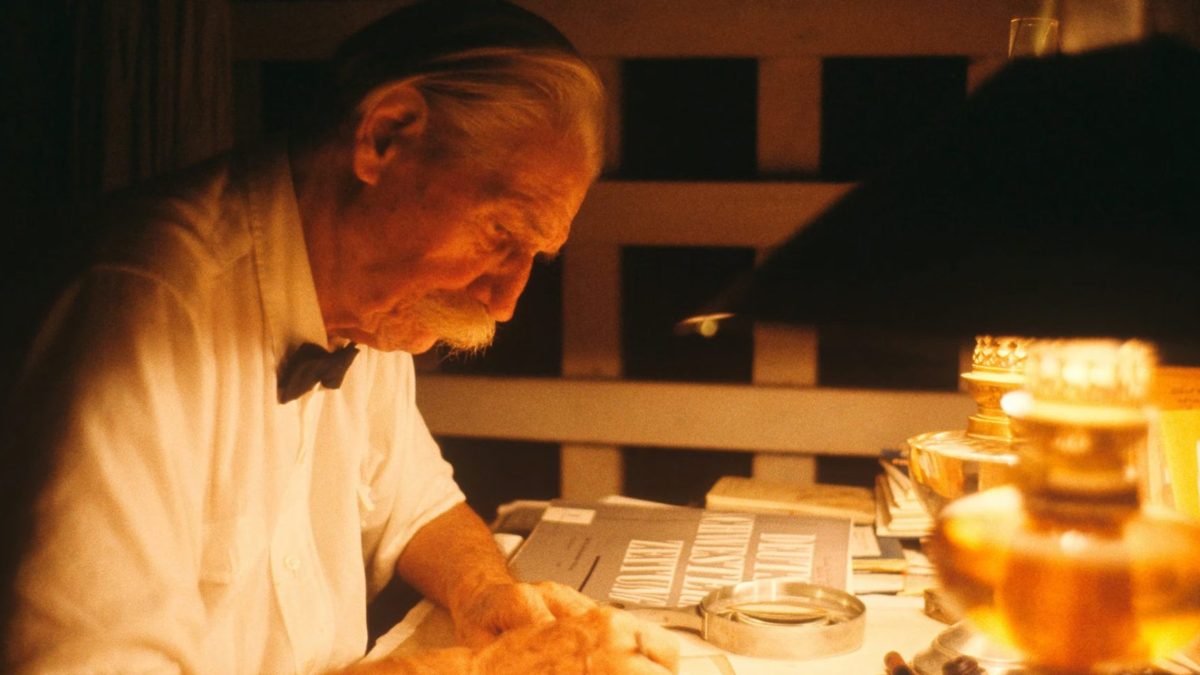
Albert Schweitzer (14 January 1875 to 4 September 1965) was a German polymath from Alsace who became a theologian, organist, musicologist, writer, humanitarian, philosopher and physician. He received the 1952 Nobel Peace Prize for his philosophy of Reverence for Life, which he expressed most famously by founding and sustaining the Hôpital Albert Schweitzer in Lambaréné, in what was then French Equatorial Africa and is now Gabon. This biography follows his life, his work and the criticisms of it.
Albert Schweitzer at a Glance
| Full name | Ludwig Philipp Albert Schweitzer |
| Born | 14 January 1875, Kaysersberg, Alsace |
| Died | 4 September 1965, Lambaréné, Gabon (aged 90) |
| Profession | Theologian, organist, philosopher and physician |
| Known for | Hospital at Lambaréné (founded 1913); Reverence for Life |
| Nobel Prize | Peace, 1952 |
| Wife | Helene Bresslau |
| Daughter | Rhena Schweitzer Miller |
| Medical degree | University of Strasbourg, 1913 |
Childhood in Alsace
Schweitzer was born on 14 January 1875 in Kaysersberg in Alsace, which had less than four years earlier become part of the German Empire. He later became a French citizen after the First World War, when Alsace returned to France. He was the son of Adèle Schillinger and Louis Théophile Schweitzer, and spent his childhood in the village of Gunsbach, where his father was the Lutheran pastor and taught him to play music. The village church was shared by Protestant and Catholic congregations, which prayed in different parts of the building at different times, and Schweitzer grew up in this environment of religious tolerance with the belief that true Christianity should work toward unity.
His first language was the Alsatian dialect of German. He studied organ in Mulhouse from 1885 to 1893 and received his school-leaving certificate in 1893. That year he played for the French organist Charles-Marie Widor, who became his teacher, and he began to study Protestant theology at the University of Strasbourg. In 1898 he returned to Paris to write a doctoral dissertation on the religious philosophy of Kant at the Sorbonne.
Theology and Music
Schweitzer rapidly gained prominence as a music scholar and organist, and he was dedicated to the rescue, restoration and study of historic pipe organs. In 1905 he published a study of Johann Sebastian Bach in French, and rewrote it as a two-volume German edition published in 1908, which was translated into English in 1911 and which the philosopher Ernst Cassirer called one of the best interpretations of Bach. His 1906 pamphlet on organ building effectively launched the 20th-century Organ Reform Movement. He also challenged both the secular and the traditional Christian views of the historical Jesus, and his work on the interpretation of Paul influenced theology for decades.
Becoming a Doctor
In 1905 Schweitzer began to study medicine at the University of Strasbourg, finishing with the degree of doctor of medicine in 1913. His decision to train as a physician, after he was already a respected theologian and musician, was made with a specific aim: to go as a doctor to work in Africa at his own expense. In 1912 he made a proposal to the Paris Missionary Society to work at its mission in Lambaréné on the Ogooué river in what is now Gabon.
The Hospital at Lambaréné
In early 1913 Schweitzer and his wife, Helene Bresslau, set off to establish a hospital near an existing mission post. The site was nearly 200 miles, or 14 days by raft, upstream from the mouth of the Ogooué. Helene served as an anaesthetist for operations. After briefly using a shed that had been a chicken hut, they built their first hospital of corrugated iron in late 1913, with a consulting room, an operating theatre and a dispensary. When the First World War began in July 1914, the couple, German citizens in a French colony, were put under supervision by the French military, and in 1917, exhausted and suffering from tropical anaemia, they were taken to France and interned.
Schweitzer returned to Africa in 1924 without his wife but with an Oxford undergraduate, Noel Gillespie, as assistant. Everything had decayed, and building and doctoring progressed together for months. A new hospital was built with the help of local people and patients. He worked there again from 1929 to 1932, in 1935, and from January 1937 continued through the Second World War, being unable to return to Europe between 1939 and 1948.
Reverence for Life
Schweitzer's ethical philosophy, which he called Reverence for Life, was expressed in many ways, most famously in the hospital. He considered the ethic, and not the hospital, to be his most important legacy. The Albert Schweitzer Fellowship, which he founded in 1940 to unite American supporters in supporting the hospital when European supply lines were cut off by war, still supports the hospital and selects and supports nearly 250 new Schweitzer Fellows in the United States and Africa each year.
Nobel Peace Prize
Schweitzer was awarded the Nobel Peace Prize of 1952 and accepted it with a speech titled The Problem of Peace. With the prize money of 33,000 dollars he started a leprosarium at Lambaréné. From 1952 until his death he worked against nuclear tests and nuclear weapons alongside Albert Einstein, Otto Hahn and Bertrand Russell. In 1955 Queen Elizabeth II made him an honorary member of the Order of Merit.
Family
Schweitzer married Helene Bresslau, and after the birth of their daughter, Rhena Schweitzer Miller, Helene could no longer live in Lambaréné because of her health. In 1923 the family moved to Königsfeld im Schwarzwald, where he was building a house, which is now maintained as a museum. He returned to Europe for the first time after the Second World War in 1948, and he kept travelling back and forth as long as he was able, and he used his home village of Gunsbach as a base for his European visits.
Criticism
Schweitzer's work has attracted serious criticism. In 1953 the journalist James Cameron visited Lambaréné and found significant flaws in the practices and attitudes of Schweitzer and his staff, describing a hospital that suffered from squalor and lacked modern amenities. The Nigerian novelist Chinua Achebe criticised a remark attributed to Schweitzer that the African was his brother but his junior brother. The American journalist John Gunther reported a patronising attitude toward Africans and noted the lack of Africans trained as skilled workers. His biographer Edgar Berman, who had volunteered as a surgeon at Lambaréné, offered a different view, arguing that patients were better off when their families lived on the hospital grounds during treatment, given the severe lack of funding.
Death and Legacy
Albert Schweitzer died on 4 September 1965 at his hospital in Lambaréné, by then in independent Gabon, aged 90. His grave on the banks of the Ogooué River is marked by a cross he made himself. He remains one of the best-known examples of a person who left a successful career to serve the sick, and also a reminder that humanitarian heroes can be judged differently by later generations. His ethic of Reverence for Life, his music scholarship and the hospital he founded are all part of his legacy.