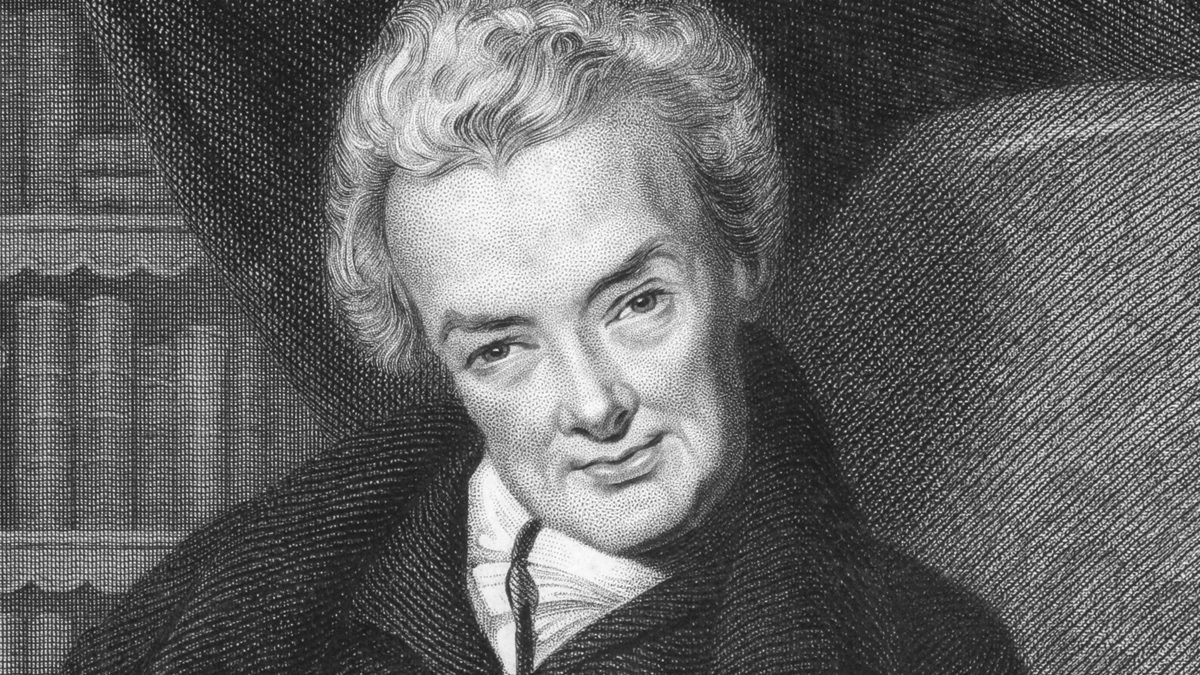
William Wilberforce (24 August 1759 to 29 July 1833) was an English politician, philanthropist and a leader of the movement to abolish the Atlantic slave trade. A native of Kingston upon Hull in Yorkshire, he began his political career in 1780 and became an independent Member of Parliament for Yorkshire from 1784 to 1812. After an evangelical conversion in 1785, he headed the parliamentary campaign against the British slave trade for 20 years, until the passage of the Slave Trade Act 1807. This biography follows his life, his campaign and the criticism of his wider politics.
William Wilberforce at a Glance
| Full name | William Wilberforce |
| Born | 24 August 1759, Kingston upon Hull, Yorkshire, England |
| Died | 29 July 1833, London |
| Profession | Politician and philanthropist |
| Parliamentary career | MP for Kingston upon Hull (1780) and for Yorkshire (1784 to 1812) |
| Known for | Leading the campaign that ended in the Slave Trade Act 1807 |
| Wife | Barbara Ann Spooner (married 30 May 1797) |
| Children | Six: William, Barbara, Elizabeth, Robert, Samuel and Henry |
| Burial | Westminster Abbey |
Early Life in Hull
Wilberforce was born in Hull on 24 August 1759, the only son of Robert Wilberforce, a wealthy merchant, and his wife Elizabeth Bird. His grandfather, also William, had made the family fortune in the maritime trade with Baltic countries and was twice elected mayor of Hull. As a child Wilberforce was small and sickly, with poor eyesight. In 1767 he began attending Hull Grammar School, then headed by Joseph Milner, who became a lifelong friend. His father died in 1768, and the nine-year-old was sent to a prosperous uncle and aunt with houses in London and Wimbledon.
His uncle and aunt had leanings towards evangelical Methodism, which alarmed his staunchly Church of England mother and grandfather, and in 1771 the 12-year-old was brought back to Hull. He was heartbroken at being separated from his relatives. He continued his education at Pocklington School from 1771 to 1776, and in October 1776, at 17, he went up to St John's College, Cambridge. The deaths of his grandfather and uncle, in 1774 and 1777, had left him independently wealthy, and he had little need or inclination to study seriously. Instead he enjoyed the social round of student life, including cards, gambling and late-night drinking, although he found the excesses of some fellow students distasteful.
Entering Parliament
Wilberforce began to consider a political career while still at university, and during the winter of 1779 to 1780 he and his friend William Pitt often watched Commons debates from the gallery. In September 1780, at the age of 21 and still a student, he was elected Member of Parliament for Kingston upon Hull, spending over 8,000 pounds, as was the custom, to secure the necessary votes. He was a regular attender of Parliament but also had a lively social life. Madame de Staël described him as the wittiest man in England, and he used his speaking voice to great effect in debates.
Pitt became Prime Minister in December 1783, and Wilberforce was a key supporter of his minority government. There is no record that Pitt ever offered him a ministerial position, perhaps because of his wish to stay independent, or perhaps because his tardiness, disorganisation and chronic eye problems suggested he was not ministerial material. In 1784 he was elected MP for Yorkshire.
Conversion
In October 1784 Wilberforce set out on a tour of Europe with his mother, his sister and Isaac Milner, the younger brother of his old headmaster. They visited the French Riviera, dined, played cards and gambled. During the journey, Milner and Wilberforce read an evangelical book together, and his spiritual journey is thought to have changed course. On his return to England he began to rise early to read the Bible and pray, and he kept a private journal. He underwent an evangelical conversion, regretting his past life and resolving to commit his future to the service of God.
At the time religious enthusiasm was stigmatised in polite society, and Wilberforce wondered whether he should remain in public life. He sought guidance from John Newton, a leading evangelical clergyman, and was counselled to stay in politics. He resolved to do so with increased diligence and conscientiousness. From then on he applied his faith to public causes, including the reform of manners and morals, and, from 1787, the abolition of the slave trade.
The Campaign Against the Slave Trade
By 1783 the triangular trade that took British goods to Africa, transported enslaved people to the West Indies and brought slave-grown products such as sugar, tobacco and cotton to Britain represented about 80 percent of Great Britain's foreign income. British ships dominated the trade. The campaign against it began in the 1780s, with the Quakers presenting the first slave trade petition to Parliament in 1783. In early 1787 Thomas Clarkson met Wilberforce and brought him evidence about the slave trade, and a group of activists including Granville Sharp, Hannah More and Charles Middleton persuaded him to take up the cause. On 12 May 1787, under a large oak at Pitt's estate in Kent, Pitt challenged his friend to give notice of a motion on the slave trade before another parliamentarian did, and Wilberforce later said that this was when he decided.
On 12 May 1789 he made his first major speech on abolition in the House of Commons, arguing that the trade was morally reprehensible and an issue of natural justice. In April 1791, with a four-hour speech, he introduced the first parliamentary bill to abolish the slave trade, but it was easily defeated by 163 votes to 88 as the political climate turned conservative after the French Revolution. A compromise of gradual abolition passed in 1792 by 230 votes to 85, which Wilberforce thought a clever ploy to delay abolition indefinitely. In February 1793 another vote was lost by only eight votes, and the outbreak of war with France that month pushed the issue aside.
Years of Setbacks and Final Victory
Wilberforce continued to introduce abolition bills throughout the 1790s despite declining public support. In June 1804 his bill passed all its stages in the House of Commons but ran out of time in the Lords, and in 1805 it was defeated. After Pitt's death in January 1806, Wilberforce collaborated more closely with the Whigs, and a change of tactics suggested by the maritime lawyer James Stephen led to the Foreign Slave Trade Bill, which received royal assent on 23 May 1806 with little attention drawn to its effect. After the 1806 general election Lord Grenville introduced an Abolition Bill in the House of Lords first, and on 23 February 1807, as tributes were paid to Wilberforce, whose face streamed with tears, the bill was carried in the Commons. The Slave Trade Act 1807 abolished the slave trade in the British Empire.
Family and Other Causes
Wilberforce showed little interest in marriage in his youth, but in his late thirties a friend recommended 25-year-old Barbara Ann Spooner. He met her on 15 April 1797, proposed after an eight-day romance, and they married on 30 May 1797 in Bath. They had six children in fewer than ten years: William, born in 1798; Barbara, 1799; Elizabeth, 1801; Robert, 1802; Samuel, 1805; and Henry, 1807. He was an indulgent and adoring father.
Beyond abolition, Wilberforce supported many causes. He championed the Society for the Suppression of Vice, British missionary work in India, the creation of a free colony in Sierra Leone, the foundation of the Church Mission Society and the Society for the Prevention of Cruelty to Animals. He was a member of the Clapham Sect, a group of evangelical reformers that included his cousin Henry Thornton, and he shared a house with Thornton in 1792.
Criticism
Wilberforce was highly conservative on many political and social issues, and he has been criticised for it. The radical writer William Cobbett attacked what he saw as hypocrisy in campaigning for the conditions of enslaved people while British workers lived in terrible conditions at home. Wilberforce spoke in 1799 in favour of the Combination Act, which suppressed trade union activity, calling unions a general disease in society, and he opposed an enquiry into the 1819 Peterloo Massacre. He also disapproved of women anti-slavery activists, such as Elizabeth Heyrick, who organised women's groups in the 1820s. These positions are part of his record, and they show that his reform was rooted in conservatism and Christian morality rather than in radical politics.
Final Years and Death
Wilberforce resigned from Parliament in 1826 because of failing health, but he continued to support the campaign for the complete abolition of slavery. In 1833 his health declined further, and he suffered a severe attack of influenza from which he never fully recovered. He made his final anti-slavery speech in April 1833 at a public meeting in Maidstone, Kent. That campaign led to the Slavery Abolition Act 1833, which abolished slavery in most of the British Empire, and Wilberforce died on 29 July 1833, three days after hearing that the passage of the act through Parliament was assured. He was buried in Westminster Abbey.
Legacy
Wilberforce's story is often told as one of persistence: a campaign that lost vote after vote for almost two decades before winning. It also shows the importance of coalitions, since the victory belonged to the Quakers and to Clarkson's evidence as well as to one parliamentarian. His name is attached to the abolition of the slave trade, and the debates about his conservative politics and about the role of enslaved people in their own liberation continue.