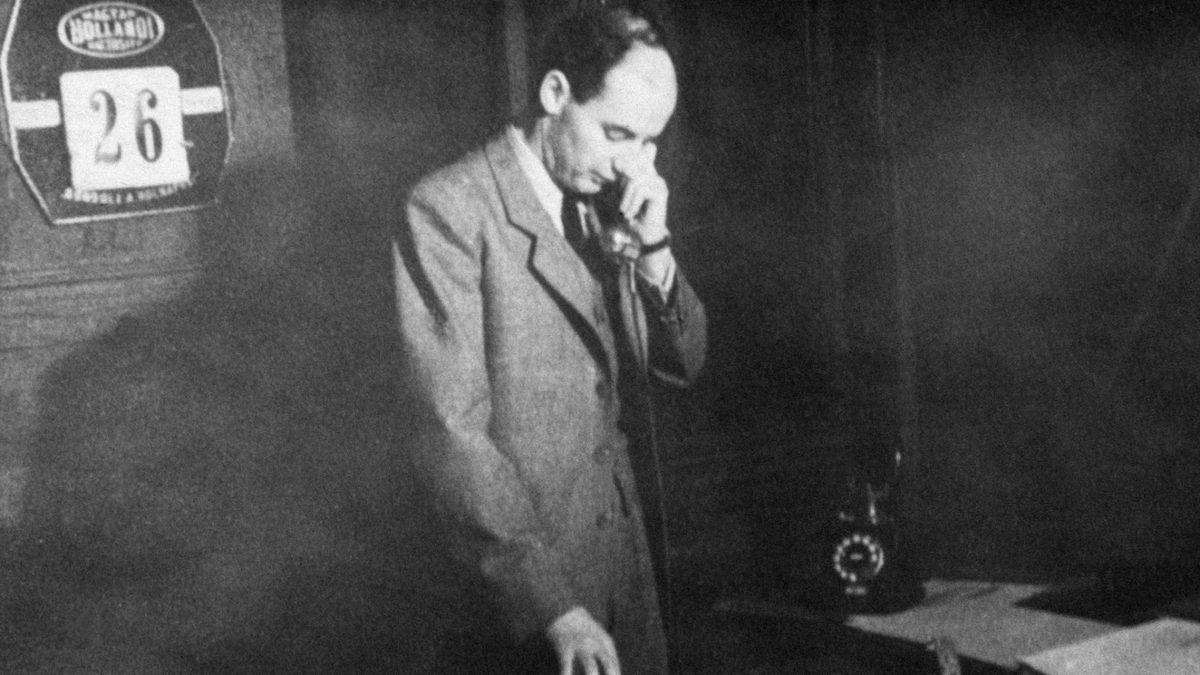
Raoul Wallenberg (4 August 1912 to disappeared 17 January 1945) was a Swedish architect, businessman, diplomat and humanitarian who saved thousands of Jews in German-occupied Hungary during the Holocaust. While serving as Sweden's special envoy in Budapest between July and December 1944, he issued protective passports and sheltered Jews in buildings he declared Swedish territory. On 17 January 1945 he was detained by Soviet agents and disappeared. This biography follows his life, his mission and the unanswered questions about his fate.
Raoul Wallenberg at a Glance
| Full name | Raoul Wallenberg |
| Born | 4 August 1912, Lidingö, near Stockholm, Sweden |
| Disappeared | 17 January 1945, Budapest, Hungary |
| Soviet report of death | 17 July 1947, reported in 1957 |
| Profession | Architect, businessman and diplomat |
| Mission | Special envoy of the Swedish legation in Budapest (from 9 July 1944) |
| Known for | Protective passports and safe houses for Hungarian Jews |
| Honours | Honorary citizen of the United States (1981), Canada, Hungary and others |
Early Life
Wallenberg was born in 1912 in Lidingö Municipality, near Stockholm, to Raoul Oscar Wallenberg, a Swedish naval officer, and Maria "Maj" Sofia Wising. His father died of cancer three months before he was born, and his maternal grandfather died of pneumonia three months after his birth. His mother and grandmother, both suddenly widows, raised him together. In 1918 his mother married Fredric von Dardel, and they had a son, Guy von Dardel, and a daughter, Nina Lagergren. His paternal grandfather, Gustaf Wallenberg, was a diplomat and envoy to Tokyo, Istanbul and Sofia.
After high school and his compulsory eight months of military service, he was sent to study in Paris for a year. In 1931 he studied architecture at the University of Michigan in the United States, and although the Wallenberg family was rich, he worked at odd jobs in his free time. Wallenberg was aware of his one-sixteenth Jewish ancestry and proud of it. He graduated in 1935, but found on returning to Sweden that his American degree did not qualify him to practise architecture there. His grandfather arranged a job for him in Cape Town, South Africa, in the office of a Swedish company that sold construction material, and after six months he took a job in Haifa at a branch of the Holland Bank.
Business and the War
From 1938 the Kingdom of Hungary, under the regency of Miklós Horthy, passed a series of anti-Jewish measures modelled on the Nuremberg Race Laws. His business associate, Kálmán Lauer, a Hungarian Jew, was affected by the measures. The situation in Hungary deteriorated as the tide of the war turned against Germany and its allies, and Horthy's government began secretly pursuing peace talks with the United States and Britain. On learning of this, Adolf Hitler ordered the occupation of Hungary.
Wallenberg was inspired by a 1941 British anti-Nazi film, "Pimpernel" Smith, in which the hero saves 28 Jews from the Nazis. He was invited with his sister to a private screening at the British Embassy in Stockholm, and she recalled that he said, as they left their seats, that it was the kind of thing he would like to do.
Recruitment by the War Refugee Board
In June 1944 important reports about the Holocaust in Hungary were publicised by George Mantello, which led to large protests in Switzerland and to warnings to Horthy from President Roosevelt and Prime Minister Churchill. The Roosevelt administration then turned to the newly created War Refugee Board, which sent Iver C. Olsen to Stockholm to put together a plan to rescue Hungary's Jews. A committee of prominent Swedish Jews led by Chief Rabbi Marcus Ehrenpreis looked for someone to travel to Budapest under diplomatic cover. When Count Folke Bernadotte's proposed appointment was rejected by the Hungarians, Lauer suggested Wallenberg, and in June 1944 Olsen was introduced to him and appointed him to lead the mission.
Mission to Budapest
Wallenberg reached the Swedish legation in Budapest on 9 July 1944. The intense Nazi campaign to deport Hungarian Jews to Auschwitz had been under way for several months, though the transports had been halted, with few exceptions, by Horthy two days earlier, in large part because of warnings from Roosevelt, Churchill, the King of Sweden and even the Pope. With money mostly raised for the War Refugee Board by American Jews, Wallenberg rented 32 buildings in Budapest and declared them extraterritorial, protected by diplomatic immunity. He put up signs such as The Swedish Library and hung oversized Swedish flags on the front of the buildings. They eventually housed almost 10,000 people.
One of his drivers, Sandor Ardai, recalled that when Wallenberg intercepted a trainload of Jews about to leave for Auschwitz, he climbed onto the roof of the train and handed protective passes through the doors that were not yet sealed. He ignored orders from the Germans to get down, and when Arrow Cross men began shooting and shouting at him, he calmly carried on handing out passports. At the height of the programme more than 350 people were involved in the rescue of Jews in Budapest. Wallenberg also started sleeping in a different house each night to guard against being captured or killed by the Arrow Cross or Adolf Eichmann's men.
Arrest and Disappearance
On 29 October 1944 Soviet forces launched an offensive against Budapest, and by late December the city had been encircled. On 17 January 1945, during the Siege of Budapest, agents of SMERSH detained Wallenberg on suspicion of espionage, and he disappeared. On 8 March 1945 Soviet-controlled Hungarian radio announced that Wallenberg and his driver had been murdered on their way to Debrecen, suggesting that the Arrow Cross or the Gestapo had killed them. Documents recovered in 1993 from previously secret Soviet military archives showed that an order for his arrest had been issued by Deputy Commissar for Defence Nikolai Bulganin. Information about his time in custody is mostly speculative, and many people claimed to have met him in prison.
On 6 February 1957 the Soviet government released a document dated 17 July 1947 stating that Wallenberg had died suddenly in his cell, probably of a heart attack or heart failure, in the Lubyanka prison in Moscow. The account has been questioned, and his fate has remained a subject of investigation for decades.
How Many Did He Save?
Some people have claimed that Wallenberg rescued 100,000 Jews who survived the Holocaust in Hungary, but historians regard that figure as an exaggeration. Yad Vashem estimates that the number of people granted protective paperwork was about 4,500. Nevertheless, he is remembered as one of the most successful rescuers, and the buildings he protected housed almost 10,000 people at their peak. He was one of many people, including diplomats, activists and ordinary citizens, who worked to save Jews in Budapest, and the effort involved over 350 people at its height.
Honours and Legacy
In 1981 the US Congressman Tom Lantos, one of those saved by Wallenberg, sponsored a bill making Wallenberg an honorary citizen of the United States, the second person ever to receive that honour after Winston Churchill. He has also been made an honorary citizen of Canada, Hungary, Australia and other countries. His story has become a symbol of individual moral courage, and the questions about his fate are a reminder of the long shadow of the Cold War. He was 32 when he was detained.