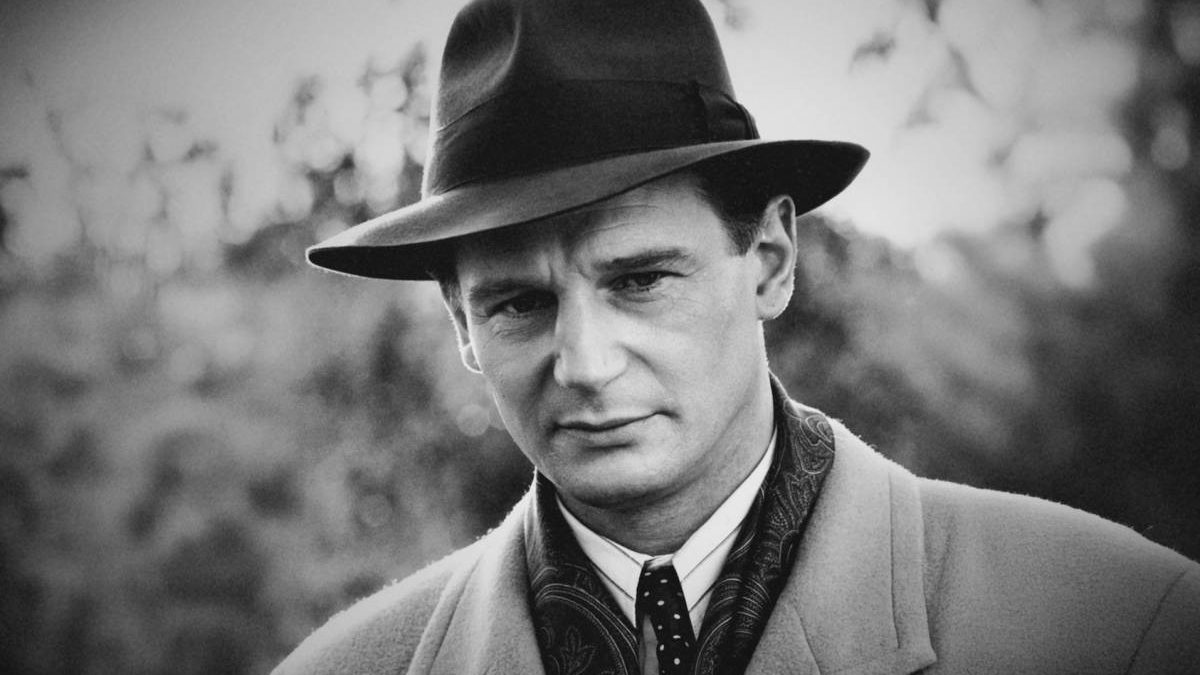
Oskar Schindler (28 April 1908 to 9 October 1974) was a German industrialist and humanitarian who is credited with saving the lives of 1,200 Jews during the Holocaust by employing them in his enamelware and ammunitions factories in German-occupied Poland and the Protectorate of Bohemia and Moravia. He is the subject of the 1982 novel Schindler's Ark and its 1993 film adaptation, Schindler's List. This biography follows his life, including the flaws that made his later rescue work so surprising, and his legacy.
Oskar Schindler at a Glance
| Full name | Oskar Schindler |
| Born | 28 April 1908, Zwittau, Moravia (then Austria-Hungary) |
| Died | 9 October 1974 (aged 66) |
| Profession | Industrialist |
| Known for | Saving about 1,200 Jews by employing them in his factories |
| Factories | Emalia in Kraków (Poland) and Brünnlitz (Moravia) |
| Wife | Emilie Pelzl (married 6 March 1928) |
| Recognition | Righteous Among the Nations (Yad Vashem); German Order of Merit (1966) |
| Adaptations | Schindler's Ark (1982) and Schindler's List (1993) |
Early Life
Schindler was born on 28 April 1908 into a Sudeten German family in Zwittau, then part of Moravia within Austria-Hungary. His father, Johann "Hans" Schindler, owned a farm machinery business, and his mother was Franziska "Fanny" Schindler, née Luser. His sister, Elfriede, was born in 1915. After attending primary and secondary school he enrolled in a technical school, from which he was expelled in 1924 for forging his report card. On 6 March 1928 he married Emilie Pelzl, the daughter of a prosperous Sudeten German farmer, and they lived with his parents for seven years.
He had a series of jobs and was arrested several times in 1931 and 1932 for public drunkenness. He had an affair with a school friend, Aurelie Schlegel, with whom he had a daughter, Emily, in 1933, and a son, Oskar Jr., in 1935. His father, an alcoholic, abandoned his wife in 1935, and she died a few months later after a long illness. It was not an obvious background for a rescuer.
Spy for the Abwehr
In 1935 Schindler joined the separatist Sudeten German Party. Although a citizen of Czechoslovakia, he became a spy for the Abwehr, the military intelligence service of Nazi Germany, in 1936. He later told Czech police that he did it because he needed the money, as he had a drinking problem and was chronically in debt. His tasks included collecting information on railways, military installations and troop movements and recruiting other spies in advance of Germany's planned invasion. He was arrested by the Czech government for espionage on 18 July 1938 and imprisoned, but released as a political prisoner under the terms of the Munich Agreement.
Emalia in Kraków
Schindler first arrived in Kraków in October 1939 on Abwehr business. In November he was introduced to Itzhak Stern, an accountant, who showed him the potential of an enamelware factory that had belonged to Jewish owners. With the financial backing of several Jewish investors, he signed an informal lease on the factory on 13 November 1939 and formalised it on 15 January 1940. He renamed it the Deutsche Emailwarenfabrik, and it became known as Emalia. He initially had seven Jewish workers. His connections in the military enabled him to obtain contracts to produce cookware, and these connections later helped him protect his workers from deportation and death.
At first Schindler was mostly interested in profit, and he hired Jews because they were cheaper than Poles, since wages were set by the occupying regime. Later he began shielding his workers without regard to cost. The status of his factory as a business essential to the war effort became a decisive factor, and as time went on he had to give Nazi officials ever larger bribes and gifts to keep his workers safe.
Płaszów and Amon Göth
The Płaszów concentration camp opened in March 1943, and its commandant, SS-Hauptsturmführer Amon Göth, shot inmates at random. Göth planned for all the factories, including Schindler's, to be moved inside the camp gates. With a combination of diplomacy, flattery and bribery, Schindler prevented his factory from being moved, and convinced Göth to allow him to build, at his own expense, a subcamp at Emalia to house his workers and 450 Jews from other nearby factories, where they were safe from random execution. He was arrested twice on suspicion of black market activities and once for kissing a Jewish girl on the cheek at his birthday party, in breach of the Nuremberg Laws, and each time was released through his connections.
Brünnlitz
By July 1944, as the Red Army approached, the SS began closing down the easternmost camps and moving prisoners west to Auschwitz and Gross-Rosen. Göth's secretary, Mietek Pemper, alerted Schindler that the Nazis planned to close all factories not directly involved in the war effort, and Schindler moved his factory to Brünnlitz in the Protectorate of Bohemia and Moravia, to continue to keep his workers. On 15 October 1944 a train carrying 700 men on his list was sent to Gross-Rosen, where they spent about a week before being rerouted to Brünnlitz. Three hundred women were sent to Auschwitz, where they were in imminent danger, and after Schindler's usual bribes failed, he eventually secured their release through his secretary. He moved 250 wagonloads of machinery and raw materials to the new factory. Few if any useful artillery shells were produced there, and when officials questioned the low output he bought finished goods on the black market and resold them. He spent most of his time in Kraków obtaining food for his workers.
After the War
Schindler moved to West Germany after the war, where he was supported financially by Jewish relief organisations. After receiving a partial reimbursement for his wartime expenses, he moved with his wife, Emilie, to Argentina, where they took up farming. When they went bankrupt in 1958, Schindler left his wife and returned to Germany, where he failed at several business ventures and relied on financial support from the people whose lives he had saved, known as Schindlerjuden, the Schindler Jews.
Recognition
On 8 May 1962 Yad Vashem invited Schindler to a ceremony in which a carob tree was planted in his honour on the Avenue of the Righteous, and he and Emilie were recognised as Righteous Among the Nations. He also received the German Order of Merit in 1966. The novel Schindler's Ark appeared in 1982 and was adapted as the 1993 film Schindler's List, directed by Steven Spielberg, who had acquired the film rights ten years earlier but did not feel ready to make the film. In 1997 a suitcase belonging to Schindler containing historic photographs and documents was found in the attic of an apartment in Hildesheim where he had stayed shortly before his death.
Death and Legacy
Schindler died on 9 October 1974, at the age of 66. His story is unusual because he was not a saint: he was a spy for German military intelligence, a profiteer and a man with serious personal failings, who used the same skills, charm, bribery and business connections, to protect people. The 1,200 people credited to him and their descendants are the best testament to what he did, and his story remains a lesson that moral choices can be made in the most compromised circumstances.