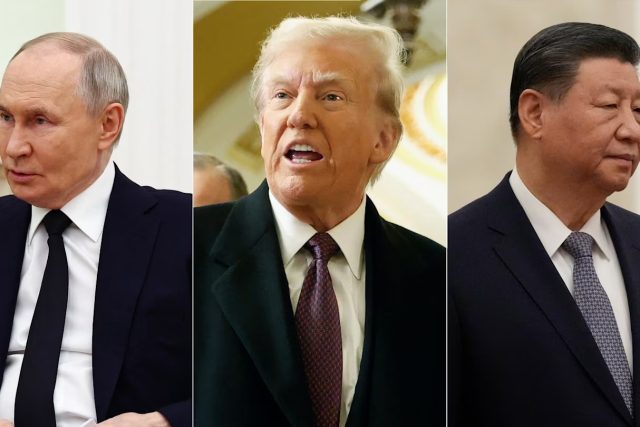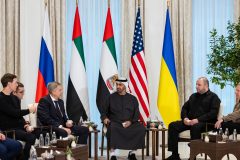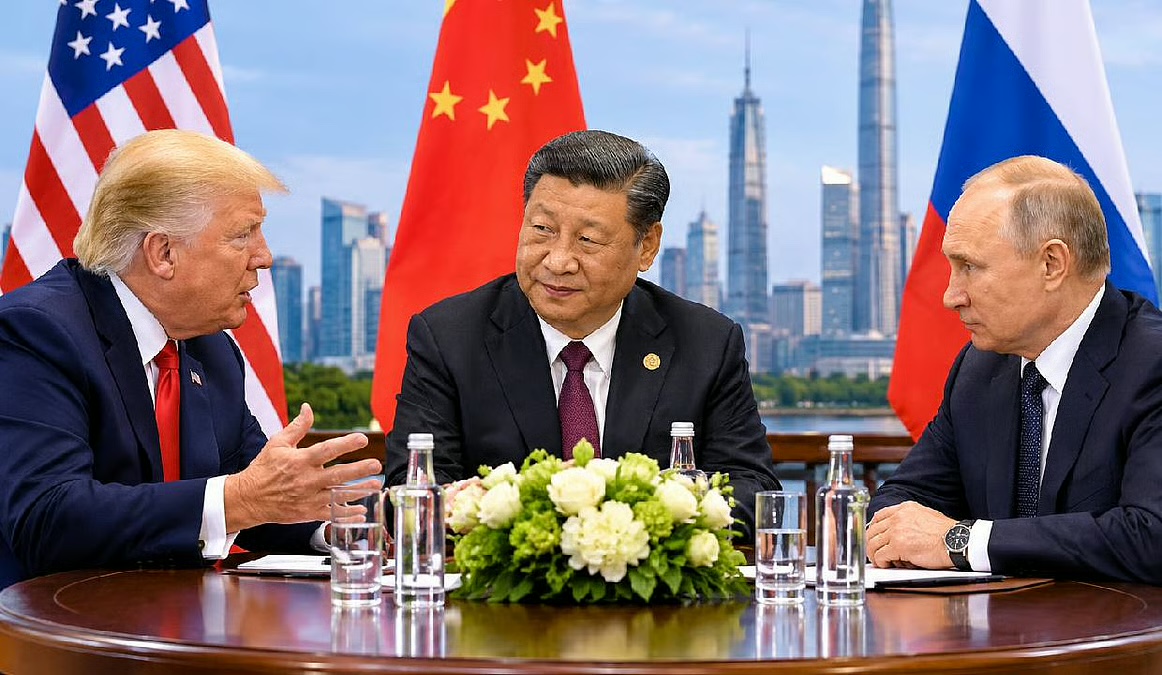
Some meetings arrive with so much weight that the paper they produce feels almost small. That was the mood on Thursday, November 19, when US President Donald Trump, Chinese President Xi Jinping and Russian President Vladimir Putin sat down together in China on the sidelines of the Asia-Pacific Economic Cooperation (APEC) gathering. Reports put the conversation at roughly ninety minutes. What the three men walked away with was a four-point “Declaration toward Peace,” a document that is short, broad and, to many observers, strikingly light on detail.
Still, a summit like this is not only about the page. It is about who was in the room, who was not, and what the world reads into the silence between the lines.
What the declaration actually says
According to a White House document described in a widely read international roundup, the declaration has four points. First, the three leaders agreed that nuclear war is inadvisable. Second, they pledged to increase the production and supply of refined petroleum products. Third, they called, in fairly general terms, for “reforming” the United Nations. Fourth, they voiced a complaint about the International Criminal Court.
Read that list slowly and you can feel how different the four items are. The first is something nearly every government on earth would sign without a second thought. The second is a practical nod to energy markets, which have been jittery for months. The third is a phrase that means different things to different capitals; Washington, Beijing and Moscow all have grievances with the UN, but they are not the same grievances. The fourth is the most pointed, and we will come back to it.
One caution is worth stating plainly. At the time of writing, the details of the declaration come largely from secondary reporting, and Associated Press coverage noted that the United States had not issued an immediate statement of its own. Anyone relying on the exact wording should check the official text once it is formally published.
Why a nuclear line matters, even when it feels obvious
It is tempting to shrug at a pledge that nuclear war is “inadvisable.” Of course it is. But diplomacy has its own grammar, and the fact that these three specific leaders put their names to a sentence about nuclear risk is not nothing. Between them, they command the three largest nuclear arsenals on the planet. Arms-control channels between Washington and Moscow have been thin for years, and Beijing has long resisted formal limits on its own growing stockpile.
One analyst quoted in the roundup argued the outcome was underwhelming, while suggesting Xi may at least have agreed to discuss nuclear issues, even if only at a conceptual level. That is the author’s interpretation, not a confirmed diplomatic fact, but it captures a sentiment many will share: a conversation is better than no conversation, yet a conversation is not an agreement.
The oil line and the quiet pressure on markets
The pledge to raise production and supply of refined petroleum products is the most concrete-sounding commitment in the text, and perhaps the most revealing. Fuel prices touch ordinary life more directly than any communique ever could. They shape what a family in Manila pays for a bus ride, what a farmer in Kansas pays for diesel and what a factory in Guangdong pays to keep its lines running.
Whether the three governments can actually move supply is a separate question. Refined products depend on refinery capacity, shipping lanes and sanctions policy, and several of those are tied up in the very conflicts the summit was meant to soothe. A pledge is a starting gesture, not a barrel of fuel.
The ICC sentence and its awkward backdrop
The complaint about the International Criminal Court stands out because of who is signing it. Democracy Now reported that Trump criticized the ICC at the summit and noted that Putin faces an ICC arrest warrant over alleged war crimes in Ukraine. In other words, one of the three signatories to a statement complaining about the court is a person the court wants to arrest.
That is not a small detail. It underlines how the declaration can be read in two very different ways. Supporters might see an effort to rebalance international institutions they feel have been used selectively. Critics will see leaders protecting themselves and their officials from accountability. Another summary of the meeting described the text as touching on immunity for state officials in international courts, a framing that, if accurate, would deepen those worries.
This arrives in the same week the International Court of Justice, a separate body from the ICC, delivered a landmark genocide ruling against Myanmar. The timing is a reminder that the machinery of international law is very much alive, whatever its critics say about it.
Ukraine, Iran and the things not on the page
The agenda for the meeting reportedly included Ukraine, Iran and nuclear disarmament. Yet the declaration, as described, does not name Ukraine at all. The war goes on regardless: on the same day, Ukrainian President Volodymyr Zelenskyy said Ukrainian drones and missiles had struck the Kerch Bridge linking Russia to occupied Crimea, while Russia said the Crimean Bridge had been attacked for the third time that week.
Meanwhile, tensions between the United States and Iran have been climbing, with reports of Iranian drones hitting a US radar facility in Bahrain and American strikes in return along a vital shipping route. None of that appears to have been resolved in Shenzhen. If the summit was meant to cool the room, the rest of the world seems not to have received the memo yet.
There was also an absence worth noting. Euronews reported that Trump left China without meeting North Korean leader Kim Jong-un, and Kim’s whereabouts were not established. That is a quieter story, but it matters, because the International Atomic Energy Agency has reported expanding uranium enrichment at North Korean facilities.
Other conversations on the margins
Summits are rarely one meeting; they are a cluster of smaller ones. Japan’s Prime Minister Sanae Takaichi said she held talks with Putin and that the two agreed to keep communicating, a notable step given how strained Tokyo-Moscow relations have been since the Ukraine invasion. Separately, the Philippines and Chile signed a free trade agreement at APEC, which is the sort of unglamorous, useful deal that tends to outlast headlines.
Those side stories are a useful corrective. While the cameras fixed on three leaders in one room, countries elsewhere on the program were doing the slow, practical work of trade and dialogue.
How to read it
So what should an ordinary reader take from all of this? A few honest observations.
First, optics are not outcomes. A group photo and a short declaration can signal a thaw, but they can also be a way of managing expectations while changing nothing on the ground.
Second, vagueness cuts both ways. A broad sentence about reforming the UN lets each government hold its own meaning, which makes agreement easy and implementation hard.
Third, the people most affected by these decisions were not in the room. The families living through the war in Ukraine, the sailors in contested shipping lanes and the refugees in overcrowded camps do not get a seat at a three-way table. They will judge this summit by whether anything changes for them, not by how the declaration is worded.
It would be unfair to dismiss the meeting entirely. In a year of sharp rhetoric, three leaders who rarely share a table agreed to talk and put a few sentences in writing. That is a beginning of some kind. But the honest verdict, for now, is the one the evidence supports: a modest paper, a heavy room and a long list of questions still waiting for answers.
We will keep following this story as the official text and any follow-up talks emerge.