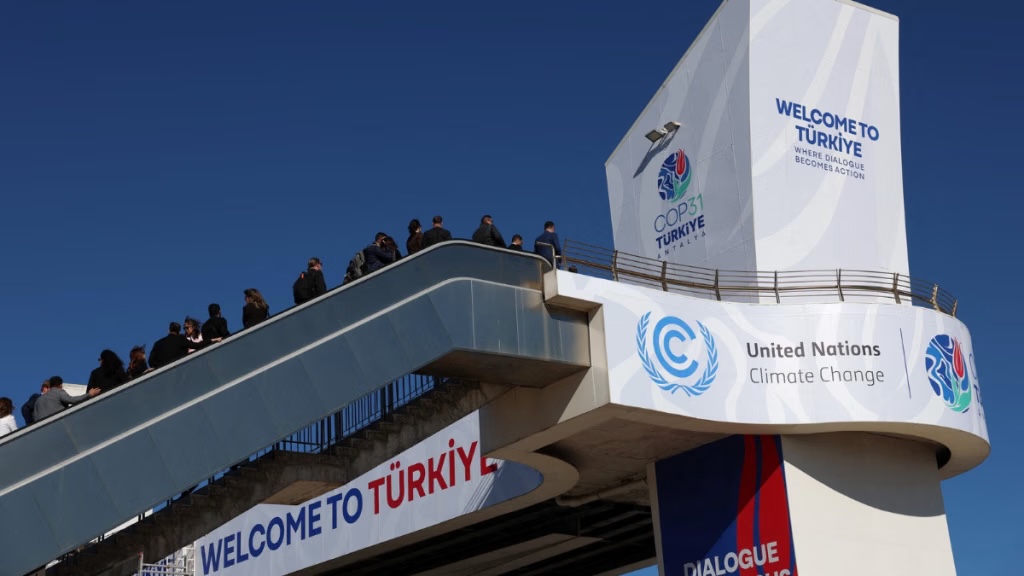
Climate summits are strange occasions. Thousands of delegates, many of them exhausted, argue over single words in documents most people will never read, and yet those words can shape energy policy for years. This week at COP31 in Antalya, Turkey, one of the most important words has simply disappeared.
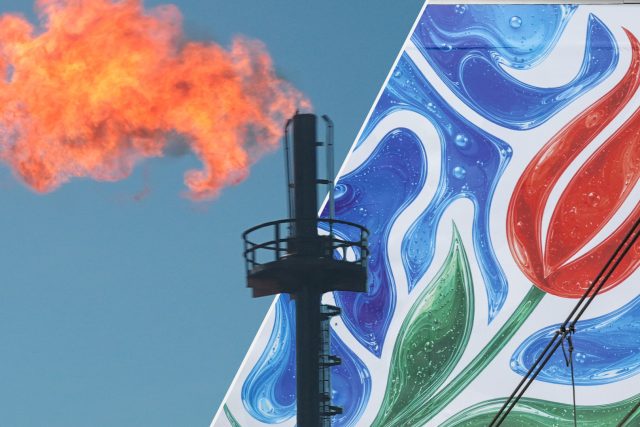
According to DW, climate negotiators have removed any mention of fossil fuels, the main source of the greenhouse gases heating the planet, from a new draft agreement published by summit co-host Australia. The latest text, released Thursday, stripped out two references to a transition away from coal, oil and gas, and a call for an accelerated phaseout that had been in an earlier draft.
What the draft says now
The new draft follows days of tough negotiations among representatives of nearly 200 nations. Here is what remains.
It still includes a call to raise the global share of final energy demand met by electricity to 35 percent by 2035, up from around 20 percent today. That proposal was pushed by host Turkey. But as DW reports, the text does not specify whether the extra electricity must come from clean sources rather than fossil fuels, a point that has drawn criticism from some countries.
The draft mentions the electrification target alongside efforts to triple renewable energy capacity globally and other energy-efficiency measures. Jan Kowalzig, a climate finance expert with Oxfam Germany, said negotiators had failed to link them “meaningfully.” He also criticized the text for not referring to a gradual transition away from fossil fuels, something that had appeared in the final decision from COP28 in Dubai several years ago. “This is insufficient for a climate conference that already decided several years ago to phase out fossil fuels and that presents itself as a conference focused on implementation,” he said.
On the science, the draft expresses “deep concern” that global warming is projected to exceed 1.5 degrees Celsius (2.7 degrees Fahrenheit) above pre-industrial levels, the threshold in the 2015 Paris Agreement. It acknowledges that every increment of warming above current levels would “result in increasingly adverse, and in some cases irreversible, impacts and risks to human and natural systems.” It calls for “deep, rapid and sustained” cuts to emissions, more action on methane and faster deployment of technologies that remove carbon from the atmosphere, many of which have yet to be proven at scale.
Australia’s Climate Change and Energy Minister Chris Bowen said the text aimed to communicate that “1.5 degrees of warming is not acceptable and will not be allowed to stand.”
The money question
If fossil fuels are the loudest debate, money is the most bitter. Divisions largely revolve around who should pay and whether support should come as grants or loans.
The second draft calls for further discussion on tripling funding for climate adaptation in developing countries to at least $120 billion (109 billion). It also notes “with concern the gap between climate finance flows and needs,” with adaptation costs in developing countries estimated at $305 billion a year up to 2035.
The reaction was sharp. Meenakshi Raman of the Third World Network said she had hoped for much more ambition from the developed world. “Coming here really confirmed the worst fears that developed countries are not only backsliding but putting nothing in terms of real meaning on the table,” she said. Harjeet Singh of the Fill the Fund campaign said the draft “trims away inconvenient mandates and accountability while leaving behind lofty rhetoric that won’t protect a single vulnerable community.”
On the other side of the table, the European Union has said it will not agree to higher climate financing pledges because it pays its “fair share” while others do not. Both positions are sincerely held, and they point in opposite directions.
A veto in the room
Climate decisions require approval from every country, meaning one objection can sink a deal. On Thursday, Panama said it would block any agreement that does not meet its demands for a cap on oil production and steps to eliminate methane. Its environment minister, Juan Carlos Navarro, said the country would “not lend its name” to “complacent or ineffective language” in the final pact.
The conference is officially due to end on Friday, though it is not unusual for these talks to run on. Bowen said he expected countries to bring concerns “in the coming hours and overnight,” adding: “We won’t be leaving the rooms of Antalya until we have that consensus.”
A hard year for the argument
The backdrop makes the stakes feel real. DW notes this edition of COP comes in a year of major climate-related disasters, from wildfires and deadly heat waves in Europe to a glacier collapse in Nepal that killed more than 1,400 people. An intensifying “super” El Niño is under way, and geopolitical shocks have sent energy prices rising globally.
It is also the first COP held after the UN acknowledged that keeping the average global temperature under 1.5 degrees Celsius is no longer realistic. Scientists are now talking about limiting the time spent above that threshold and bringing temperatures back down rapidly by the end of the century.
That shift is changing the language of the talks. According to DW, countries disagree about how to acknowledge “overshoot” in the final agreement, and some worry that fossil-fuel producers such as Saudi Arabia and Iran are seeking to drop 1.5 degrees entirely, which could lead to “backsliding,” as AFP reported. David Waskow of the World Resources Institute said it is “critically important for this COP to recognize, and this is really the first COP that will likely do so, that we are on the way to overshooting 1.5 degrees.”
Why a missing phrase matters
It is fair to ask whether a missing phrase in a draft is really news. Drafts change. Final texts are different from early ones, and the conference is not over.
But the omission is telling. The idea of moving away from fossil fuels was one of the headline outcomes of COP28 in Dubai. Seeing it vanish from a working text suggests how hard it is to turn a headline into a habit. Producers of oil and gas have economic interests at stake, and many developing countries argue that they should not be asked to give up fuels that rich countries burned for a century.
Those arguments are not frivolous, and they are why climate diplomacy is so slow. But every year of delay is paid for by someone, usually people with the least power in the room.
Voices that rarely make the headlines
Behind the delegations are communities that experience the consequences first. Adaptation funding, the money used for sea walls, drought-resistant crops, early-warning systems and cooling centers, is not an abstraction to them. When the draft talks about a $305 billion annual need and a gap in funding, it is talking about whether villages get a flood barrier before the next storm, or after.
That is why campaigners focus so intensely on the finance line. For people on the front lines, a number in a text is a promise they can hold governments to, and a missing number is a promise they cannot.
What to watch
Whether fossil fuels return to the text in some form before it is adopted.
Whether Panama, or any other country, follows through on its threat to block an agreement.
How the final text handles the temperature overshoot and the 1.5 degree target.
Whether adaptation funding is tripled to at least $120 billion, and who pays.
How long the talks run past Friday’s official deadline.
The takeaway
COP31 is not finished, and drafts are not decisions. But the direction of travel in the latest text is worth noting, because it shows how fragile hard-won language can be.
The people negotiating in Antalya are tired, the issues are enormous and the compromises are painful. What the rest of us can do is pay attention to the final words when they arrive, and ask not only what they say but what they leave out.