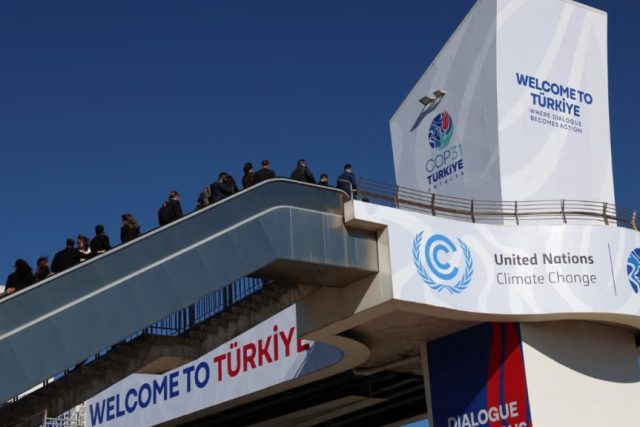
The United Nations climate conference in Turkey has ended without a major new deal to tackle global warming, after two weeks of negotiations exposed deep divisions over fossil fuels and over money for poorer countries. The COP31 summit in Antalya was scheduled to finish on Friday but ran late into Sunday as diplomats searched for common ground, making it the longest UN climate conference in history. In the end, the final text proved unacceptable to the European Union, Pacific island nations and a range of other delegations, leaving the world's main climate negotiating process with a bruising and very public failure.
The central complaint was that the closing draft did not directly mention fossil fuels, the main cause of global warming. Exhausted delegates were handed a new draft deal in the early hours of Sunday in a final attempt to break the deadlock, but the words "fossil fuels" did not appear anywhere in the text. The only indirect reference to coal, oil and gas was a nod to the agreement reached at COP28 in 2023, when countries committed to "transition away" from fossil fuels in energy systems. For many governments that had spent two weeks arguing for stronger language, a passing reference to a three-year-old promise was a step backwards rather than forwards.
The European Union's representative, Irish Minister Darragh O'Brien, made clear that the bloc "strongly" objected. He said the decisions "go nowhere near the level of ambition needed to tackle climate change" and added: "It is unconscionable that we would have a climate pact that makes no mention of fossil fuels." Other countries, including Panama and the Marshall Islands, also criticised the deal for failing to match the pace of climate change. For small island states in particular, the question is not abstract. Rising seas and stronger storms threaten their territory and their economies, and they have used the annual COP process as their most important platform for pressing larger emitters to act.
The fight over wording had been building all week. A first draft of the deal, circulated on Monday, mentioned "fossil fuel" or "fossil fuels" six times. That was unacceptable to oil-producing nations, and the references were stripped out in successive rounds of bargaining. Saudi Arabia's delegate, Mohammad Ayoub, said Arab countries "continued to engage in good faith" but argued that they accounted for only a small proportion of historical greenhouse gas emissions. Russia warned delegates not to "turn to slogans" over coal, oil and gas, claiming that if countries moved away from fossil fuels too quickly it would lead to "fuel poverty". These arguments, familiar from earlier summits, show how hard it remains to build consensus in a forum where every country effectively holds a veto.
Money was the second great fault line. Many poorer countries objected to the absence of any clear financial commitments from richer nations to help them adapt to the impacts of rising temperatures, such as more intense heatwaves and more severe droughts. Last year at COP30 in Brazil, nations agreed to triple the finance available for adaptation. But this year's text contained no reference to concrete figures, nor to the baseline against which that pledge would be measured. That raised fears that richer countries would be left with too much wriggle room to claim they had met their promise without increasing the real flow of funds. "Rich nations and polluting governments cannot keep arriving empty-handed," said Mohamed Adow of Power Shift Africa, an African climate and energy think tank.
The collapse is historically significant. The last time a COP's main political agreement fell apart in this way was in 2009 in Copenhagen, a summit that is still remembered as a low point for climate diplomacy. UN Secretary-General Antonio Guterres, attending his last COP before he steps down, said he was "deeply disappointed". He directed sharp words at what he called "powerful fossil fuel interests", who he said were taking "a page from Big Tobacco's playbook: distorting the science, delaying policy, blocking action, and piling up huge profits while people everywhere pay the price". The language was unusually blunt for a UN chief and reflected the frustration of a man who has spent years urging governments to move faster.
Reaction from political leaders and campaigners was swift. Australian Prime Minister Anthony Albanese, whose country co-hosted the talks, attributed the failure to "difficult geopolitical times". "That is the reality," he said on Monday. The unusual hosting arrangement was itself a talking point. While the talks took place in Antalya in Turkey, Australia led the official negotiations, which some observers said created a chaotic dynamic and blurred lines of responsibility. Whether that arrangement contributed to the breakdown is a question diplomats are likely to debate for some time, although the substantive disagreements over fossil fuels and finance were clearly the decisive factor.
Former US vice-president and climate advocate Al Gore said it was "outrageous that a handful of petro-states have veto power over any mention of fossil fuels". He argued that the COP process was "in need of significant reform", writing on X that most countries sought "to move forward in good faith". "It's time that we empower those leaders with a reinvigorated multilateral process that reflects the latest science and represents the will of the majority of the world," he added. His comments echo a growing argument that the consensus rule, which requires every participating country to agree, hands a disproportionate power to the most reluctant participants and makes ambitious outcomes harder to reach each year.
The United Kingdom said it would keep working with partners despite the setback. Energy Secretary Miatta Fahnbulleh described the failure to reach a political agreement as "immensely disappointing", but said it "only strengthens our resolve to work with partners around the world on the genuine progress made in Antalya on tackling the climate crisis". She added that the UK's commitment was "unwavering". That framing points to a likely next step. When the formal process stalls, coalitions of willing countries often try to make progress outside it, through smaller agreements on methane, coal phase-outs, forests or clean-energy finance that do not require every government's sign-off.
What happens now is uncertain. Without a headline political agreement, the practical work of the climate regime continues in the background, including the technical negotiations on reporting, carbon markets and adaptation that proceed under their own mandates. But the symbolic damage is real. Annual COP summits are meant to ratchet up ambition, and a conference that cannot even name fossil fuels in its closing text sends a discouraging signal to investors, businesses and citizens who are trying to judge how quickly the energy transition will move. It also leaves the next host and presidency with the task of rebuilding trust between rich and poor countries and between oil producers and the rest.
The failure also lands at a moment of heavy political strain across the world. Wars, trade disputes, high energy bills and domestic political pressures have squeezed the attention and the budgets that governments can devote to climate policy. Albanese's reference to "difficult geopolitical times" captures that mood, but critics argue it is also an excuse. The countries pressing for stronger language, among them the EU and the most climate-vulnerable island states, did not accept that hard times justified silence on the primary cause of warming. Their rejection of the text was a deliberate choice to accept no deal rather than a weak one.
For ordinary people, the consequences will play out slowly. A failed summit does not by itself change the weather, but it affects the pace at which governments set targets, mobilise finance and shift away from coal, oil and gas. Poorer nations that depend on international support to build sea walls, protect crops and prepare for heatwaves will wait longer for clarity on how much help is coming and from whom. Richer nations, for their part, will face pressure to show at home and abroad that their commitments are real and measurable.
In the end, COP31 will be remembered for the record length of its talks and for the stark choice delegates made at the finish line. Many countries decided that a climate pact silent on fossil fuels was worse than no pact at all. Whether that stand becomes a turning point that forces a fairer and more ambitious process, or simply another missed opportunity, will depend on what governments do in the months ahead. For now, the world's biggest climate forum has reached the end of its longest meeting with its central question unanswered.