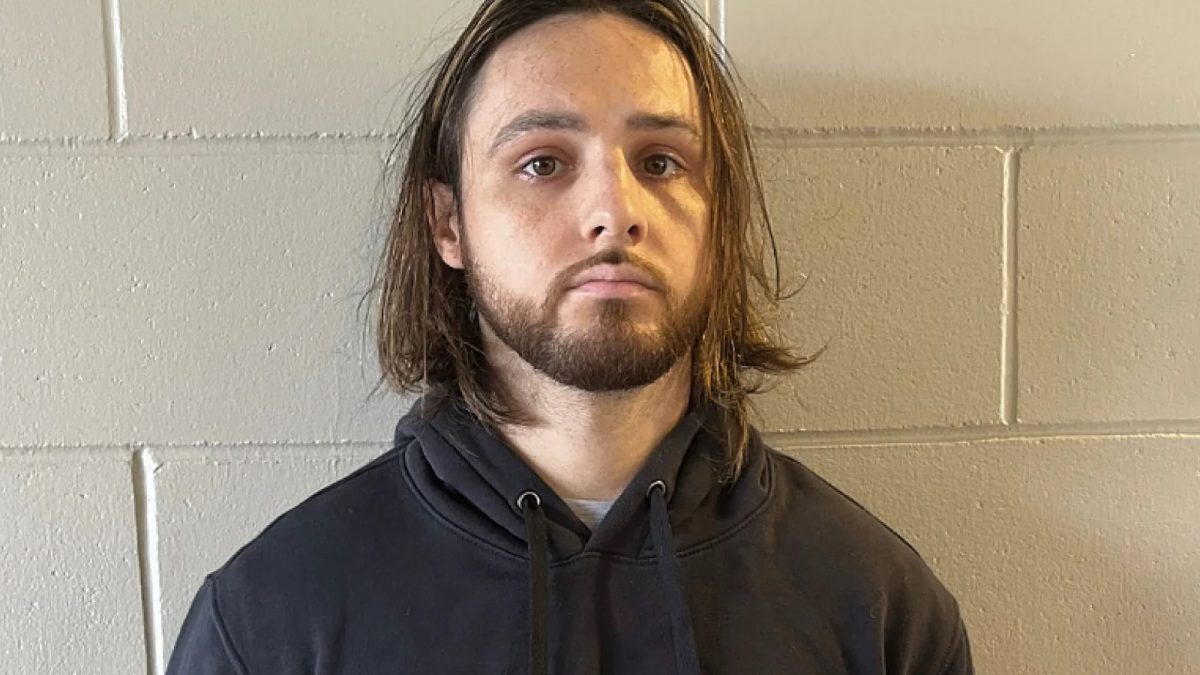
A jury in Los Angeles has found a 30-year-old man guilty of starting one of the most destructive wildfires in California's history. Jonathan Rinderknecht was convicted of arson over the fire that swept through Pacific Palisades and parts of Malibu in January last year, killing 12 people and destroying more than 6,800 buildings. The verdict was handed down nearly five months after deadlocked jurors led the judge to declare a mistrial, meaning prosecutors had to try the case a second time to secure a conviction.
Rinderknecht, who had pleaded not guilty, was found guilty of two federal charges. He is due to be sentenced on 17 March, when he faces between five and 20 years in prison on each charge. One of the charges related to starting the original brush fire, while the other centred on the damage caused when it reignited into a catastrophic blaze. Prosecutors said he lit a fire on 1 January last year, which burned undetected deep in root systems before flaring back up six days later.
That detail is at the heart of the case. The theory that a fire could smoulder underground for nearly a week before breaking out again is a technical one, and the defence argued at trial that prosecutors lacked sufficient physical evidence or records to prove it. Defence attorney Steve Haney told jurors that the case was not supported by enough direct proof. The first trial ended with a deadlocked jury and a mistrial, a sign of how closely divided jurors were over whether the evidence met the high standard required in a criminal case.
Prosecutors, however, built their case from a range of sources. They cited geolocation data from Rinderknecht's iPhone, security camera footage showing his car's location, and testimony from passengers. Rinderknecht is a Los Angeles resident and a former ride-share delivery driver, and some of the witnesses were people he had driven. Together, the evidence was used to place him at the scene and to show his movements around the time the first fire was set.
The motive alleged by the government was personal and, in some respects, ideological. Prosecutors argued he was driven by revenge, anger and loneliness because he had nowhere to go for the holiday. They also alleged that Rinderknecht had a "deeply entrenched belief that the wealthy were destroying the world", and that in turn he purposely started the blaze in the affluent neighbourhood. The defence did not accept that characterisation, and its lawyers said they were "disappointed" by the verdict, though they added that they respected the jury's decision.
Bill Essayli, who leads the US Attorney's Office for the Central District of California, welcomed the outcome. "We were determined to hold him accountable, and today's guilty verdict delivers a measure of justice for the families who lost loved ones and the thousands whose lives were upended," he said. His statement captures the weight placed on the trial by a community that has spent nearly two years dealing with grief, displacement and anger over how the disaster unfolded.
The Palisades fire was one of several that ignited back-to-back across the Los Angeles region in January last year. Taken together, those fires left 31 people dead and destroyed 16,000 structures. The Palisades blaze alone claimed 12 lives and destroyed more than 6,800 buildings, ranking it among the most destructive wildfires the state has seen. Entire neighbourhoods were wiped out, and the images of burning homes and fleeing residents became among the defining pictures of the disaster.
Los Angeles Mayor Karen Bass, who was widely criticised for her handling of the fires, responded to the verdict with a restrained statement. "No verdict can bring back the lives lost or erase the pain families have endured," she said. "So many are still struggling to rebuild. For those still displaced, the devastation remains a daily reality." Her words acknowledged a point that a criminal conviction cannot address: for thousands of people, the work of rebuilding homes, businesses and communities is far from finished.
The case also raises wider questions about how wildfires start and how they are investigated. Many of the largest fires in California have been traced to power lines, equipment failures or accidents, which typically lead to civil litigation and regulatory action rather than criminal charges. A conviction for deliberately starting a fire of this scale is rare. It sends a message about the legal consequences of arson, but it also leaves open broader debates about preparedness, firefighting resources and the readiness of authorities to deal with a fire that reignited after being thought to be contained.
The timeline of the fire's reignition is particularly sensitive. Prosecutors say the initial fire on 1 January was set and then burned undetected before flaring up again on 7 January, when it spread rapidly through the Palisades. Residents and public officials have asked how a fire that began a week earlier was not fully extinguished. That question is separate from Rinderknecht's guilt, but it forms part of the ongoing public reckoning about how the city and state responded. The verdict resolves the question of who started the fire, according to the jury, without settling the larger issue of whether it should have been stopped.
For survivors and families of those who died, the conviction brings a form of closure but not an end to the process. The sentencing hearing on 17 March will give victims and relatives a chance to address the court, and the length of the prison term will be closely watched. The range of five to 20 years on each charge gives the judge wide discretion, and prosecutors are likely to argue for a substantial sentence in light of the deaths and destruction. The defence may seek to appeal, and any appeal would focus on how the evidence was presented and whether it was enough to sustain the verdicts.
Meanwhile, rebuilding continues across the burned areas. Homeowners are navigating insurance claims, permits and construction costs, and many are weighing whether to return at all. The conviction cannot restore what was lost, but for many residents it answers a question that has hung over the neighbourhood since the flames died down: whether someone was responsible and whether that person would face justice.
The trial has been one of the most closely watched criminal cases in California in recent years, not only because of the scale of the damage but because it blended forensic detail, digital evidence and a sharply contested theory of how the fire spread. Its outcome shows how prosecutors can use phone data and video to reconstruct events years after the fact, and how a second jury can reach a verdict where the first could not. As Rinderknecht awaits sentencing, the city turns its attention again to recovery and to the lessons of a disaster that changed Los Angeles.