The United Kingdom has imposed sanctions on five senior Myanmar military leaders after the International Court of Justice (ICJ) ruled that the country had carried out genocide against the Rohingya minority, a verdict the BBC described as the first time a state has been found guilty of the crime. The announcement, made on 23 November 2026, is the sharpest British response yet to a judgment the BBC has described as historic, and it comes with a commitment to pass new legislation cutting off supplies of aviation fuel to Myanmar.
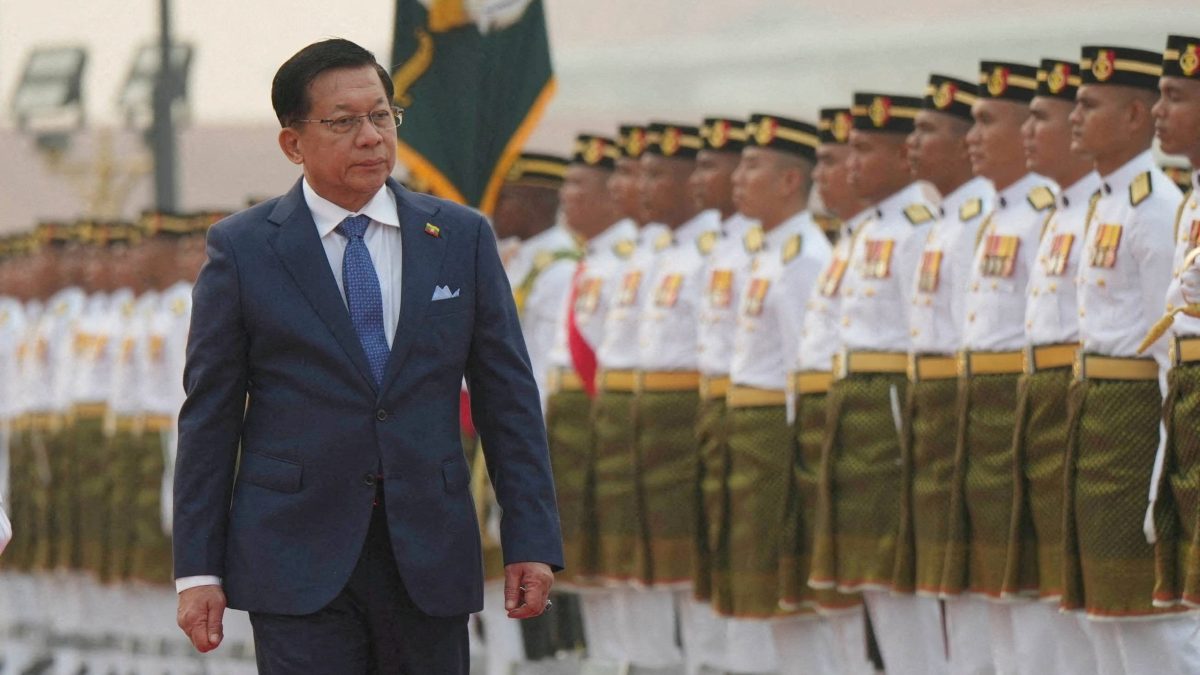
The five officers named by the government are Myo Htut Hlaing, Myo Min Tun, Myat Thet Oo, Kyaw Soe and Kyaw Swar Oo. Foreign Secretary Ed Miliband said: "Our response to a crime as profoundly shocking as genocide must reflect our values and must be matched by clear action." He also said that Myanmar's President Min Aung Hlaing, who was sanctioned by the UK in 2021, is "directly responsible for many of the atrocities that have happened" because he was head of the military at the time of the genocide in 2017.
The ICJ decision is the foundation of everything that follows. The court, in a ruling delivered last week, found that "genocidal intent is the only reasonable inference that can be drawn from the evidence" it had seen. The verdict was reached by a majority of nine votes to six among a panel of judges from around the world. The ICJ also found, again by majority, that Myanmar had violated several other parts of the 1948 Genocide Convention. The court determined that about 10,000 Rohingya were murdered during the clearance operation in the western Rakhine state, which borders Bangladesh and the Bay of Bengal. Myanmar denied the claims against it.
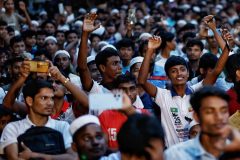
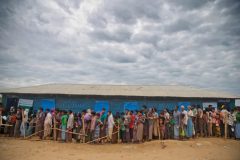
The events at the heart of the case took place in 2017. According to the BBC, a military crackdown that year killed thousands of Rohingya and forced more than 700,000 to flee Buddhist-majority Myanmar, formerly known as Burma, across the border to Bangladesh. Reports at the time said entire villages were burnt down and that women and girls were raped. Miliband told the House of Commons that more than 1.2 million refugees had fled and were being supported by Bangladesh, a figure that reflects the cumulative number of Rohingya who have sought refuge there over the years. The difference between the two figures, 700,000 forced out in 2017 and more than 1.2 million supported in total, is a reminder that the crisis did not begin or end in a single season.
Britain is not acting alone. The BBC reports that several other countries, including Australia, Belgium, Portugal, Spain and Canada, have also acknowledged the ICJ ruling. That matters because the court itself has no army or police force to enforce its judgments. Its decisions carry legal and moral authority, but their practical effect depends on states that choose to act on them, through sanctions, diplomatic pressure, support for prosecutions, or measures that restrict the military's access to money and weapons.
The government's package goes beyond naming individuals. Miliband said new legislation would be passed to stop the supply of aviation fuel to the country. Air strikes are one of the main tools the Myanmar military uses against opponents, and MPs heard that air strikes and violence from the Arakan Army, an armed group operating in Rakhine, are still happening. Cutting off fuel is a measure aimed at the capacity to carry out those strikes rather than at individuals alone. Last week, Miliband also expelled Myanmar's defence attaché after the ICJ ruled that the country had committed genocide. He told MPs on Monday that the UK would raise the issue at the UN Security Council this week, and that a dedicated meeting would follow in a fortnight.
Miliband's demands of Myanmar's authorities were wide-ranging. He said Myanmar "must stop ongoing violations, investigate, prosecute and punish perpetrators, and prevent such an atrocity from ever happening again". He called for an immediate pause in hostilities to allow humanitarian aid through, a stop to air strikes on civilians, the release of political prisoners, and dialogue towards an inclusive political settlement. Those demands reflect the fact that Myanmar's crisis is not only about the Rohingya. The country's military deposed the civilian leader Aung San Suu Kyi in 2021, the same Suu Kyi who led the government during the 2017 genocide, and the country has been in turmoil ever since.
That political history complicates the picture, because the ICJ's finding implicates the state as a whole while individual responsibility remains the preserve of other courts and mechanisms. Suu Kyi, who was Myanmar's leader during the genocide, was overthrown by the military that carried out the 2017 operation, and the man now holding the presidency, Min Aung Hlaing, was its commander. The sanctions announced this week do not substitute for criminal prosecution, but they signal that the UK considers the leadership responsible and intends to raise the cost of its conduct.
What difference can sanctions make? Supporters point to the combined effect of travel bans, asset freezes and restrictions on materiel, especially when several countries act together. The inclusion of aviation fuel is notable because it targets a specific capability and because it requires primary legislation, which gives the measure a more lasting character than a list of names. Sceptics note that Myanmar's military has long operated under sanctions, and that the generals' main suppliers and partners lie outside the group of states now acting. Both views have merit, and the answer will depend on how many other governments follow Britain's lead and how consistently the measures are enforced.
For the Rohingya themselves, who remain in crowded camps in Bangladesh or in precarious conditions inside Myanmar, the ruling is a long-awaited acknowledgement of what they say happened to them. The BBC has published harrowing testimonies, including a survivor who said "my family died in front of my eyes". Recognition by a global court that the violence was genocide, rather than an unfortunate by-product of counter-insurgency, is the starting point for any claim to justice, compensation and safe return.
The weeks ahead will test how far the momentum goes. The Security Council meetings Miliband has promised will show whether major powers are willing to move beyond statements. The legislation on aviation fuel will show how quickly Britain can turn words into law. And the response of Myanmar's government, which denied the claims at the ICJ, will indicate whether there is any prospect of engagement or whether the country's military leadership will dig in. What is already clear is that the ICJ's judgment has changed the legal landscape: states that once spoke of a humanitarian crisis are now speaking of genocide, with all the obligations under the 1948 Convention that the word carries.