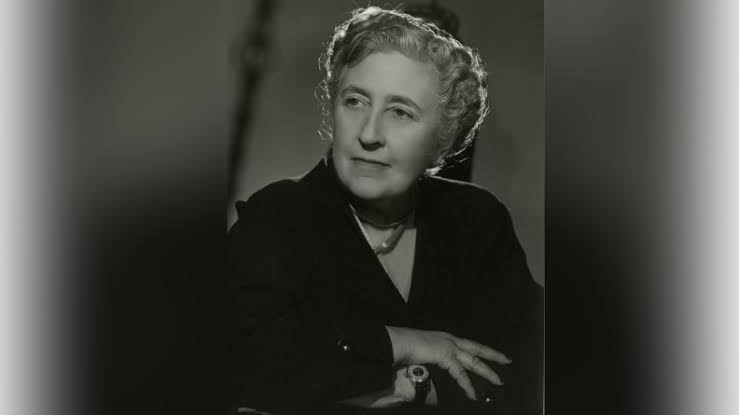
Agatha Christie (Agatha Mary Clarissa Miller, 15 September 1890 to 12 January 1976) was an English writer, best known for her detective novels and short stories, and for creating the detectives Hercule Poirot and Miss Jane Marple. She is one of the best-selling authors of all time, and her play The Mousetrap became the longest-running play in the history of the London stage. She was made a Dame of the British Empire in 1971 and died at the age of 85. This biography follows her life, her books and her legacy.
Agatha Christie at a Glance
| Birth name | Agatha Mary Clarissa Miller |
| Born | 15 September 1890, Torquay, Devon, England |
| Died | 12 January 1976, Winterbrook House, near Wallingford, England (aged 85) |
| Profession | Novelist, short-story writer and playwright |
| Best-known creations | Hercule Poirot, Miss Marple, The Mousetrap |
| Famous books | The Murder of Roger Ackroyd, Murder on the Orient Express, And Then There Were None |
| Honours | Dame Commander of the Order of the British Empire (1971), first Mystery Writers of America Grand Master Award (1955) |
| Spouses | Archibald Christie (1914 to 1928) and Max Mallowan (1930 until her death) |
| Child | Rosalind Hicks |
Early Life in Torquay
Agatha Miller was born in Torquay, on the Devon coast, the youngest child of Frederick Miller, an American-born businessman, and Clara Boehmer. She was educated largely at home, learning to read and write from her mother, and she spent much of her childhood reading and inventing stories. During the First World War she worked at the Town Hall Red Cross Hospital in Torquay, first as an unpaid Voluntary Aid Detachment nurse and then as a dispenser, where she gained the knowledge of poisons that would shape her fiction.
First Marriage and First Novel
In 1914 she married Archibald Christie, an officer in the Royal Flying Corps. During the war she wrote The Mysterious Affair at Styles, which introduced the Belgian detective Hercule Poirot. After several publishers rejected it, the novel was published in 1920. Her daughter, Rosalind, was born in 1919. Christie's early novels were popular, and in 1926 The Murder of Roger Ackroyd was another landmark, and it was later voted one of the best crime novels of all time.
The 1926 Disappearance
In December 1926, at a time when her mother had died and her marriage was in difficulty, Christie disappeared from her home in Berkshire. Her car was found abandoned, and the case drew great public attention, with police, volunteers and newspapers involved in the search. She was found eleven days later, on 14 December 1926, at the Swan Hydropathic Hotel in Harrogate, registered under the surname of her husband's lover. She never gave a full public explanation of what had happened, and the episode has been the subject of speculation ever since. She and Archibald Christie divorced in 1928.
Marriage to Max Mallowan
In 1928, after her divorce, Christie left England and took the Simplon Orient Express to Istanbul and then to Baghdad. In Iraq she became friends with the archaeologist Leonard Woolley and his wife, who invited her to return to their dig in February 1930, and on that second trip she met Max Mallowan. In 1930 Christie married the archaeologist Max Mallowan, who was 13 years her junior. She travelled with him to excavations in Iraq and Syria, and the settings of the Middle East appear in books including Murder in Mesopotamia and Death on the Nile. The marriage lasted until her death. She wrote a memoir of the digs, Come, Tell Me How You Live, and in her autobiography she said that the years of travelling with her husband were among the happiest of her life.
Poirot, Miss Marple and the Great Novels
The golden age of Christie's career was the 1930s. Murder on the Orient Express (1934), set on a snowbound train, is among her most famous works, and Death on the Nile (1937) became a classic of the genre. And Then There Were None (1939), in which ten strangers are killed one by one on an island, is often cited as her masterpiece and as one of the best-selling crime novels ever written. Miss Marple, an elderly woman who solves crimes from her village of St Mary Mead, appeared first in short stories in the 1920s and then in the novel The Murder at the Vicarage (1930). Over her career Christie wrote 66 detective novels and 14 short-story collections, as well as six novels that she published under the name Mary Westmacott.
The Mousetrap and the Theatre
Christie also wrote plays. The Mousetrap opened in London's West End on 25 November 1952, and by 2018 more than 27,500 performances had been given. It was closed temporarily in 2020 because of Covid-19 lockdowns and reopened in 2021, and it is the longest-running play in the world. It is famous for the tradition of asking the audience not to reveal the identity of the murderer. Other plays, including Witness for the Prosecution, were also adapted for the stage and screen, and her stories have been filmed many times.
Honours
In 1955 Christie was the first recipient of the Mystery Writers of America's Grand Master Award, and in the same year Witness for the Prosecution received an Edgar Award for best play. She was made a CBE in 1956 and was co-president of the Detection Club, the society of crime writers, from 1958 until her death. In the 1971 New Year Honours she was promoted to Dame Commander of the Order of the British Empire. She is the best-selling novelist of all time, with more than two billion copies of her books sold.
Later Life and Death
In her later years, Christie continued to publish a novel almost every year, and she lived at Winterbrook House, near Wallingford. She died on 12 January 1976 at Winterbrook House, at the age of 85, and was buried in the churchyard of St Mary's in Cholsey. During the Second World War she wrote two novels, Curtain, featuring Poirot, and Sleeping Murder, featuring Miss Marple, and sealed them in a bank vault for later publication.
Legacy
Christie is regarded as one of the founders of modern crime fiction. Her ingenious plots, her use of misdirection and her ability to fool the reader made her the model for generations of detective writers. Her books remain in print around the world, and her characters have been played on screen by many actors, among them Peter Ustinov, David Suchet and Kenneth Branagh as Poirot, and Margaret Rutherford and Joan Hickson as Miss Marple. Christie and Mallowan acquired the Greenway Estate in Devon as a summer residence in 1938, and it was given to the National Trust in 2000.