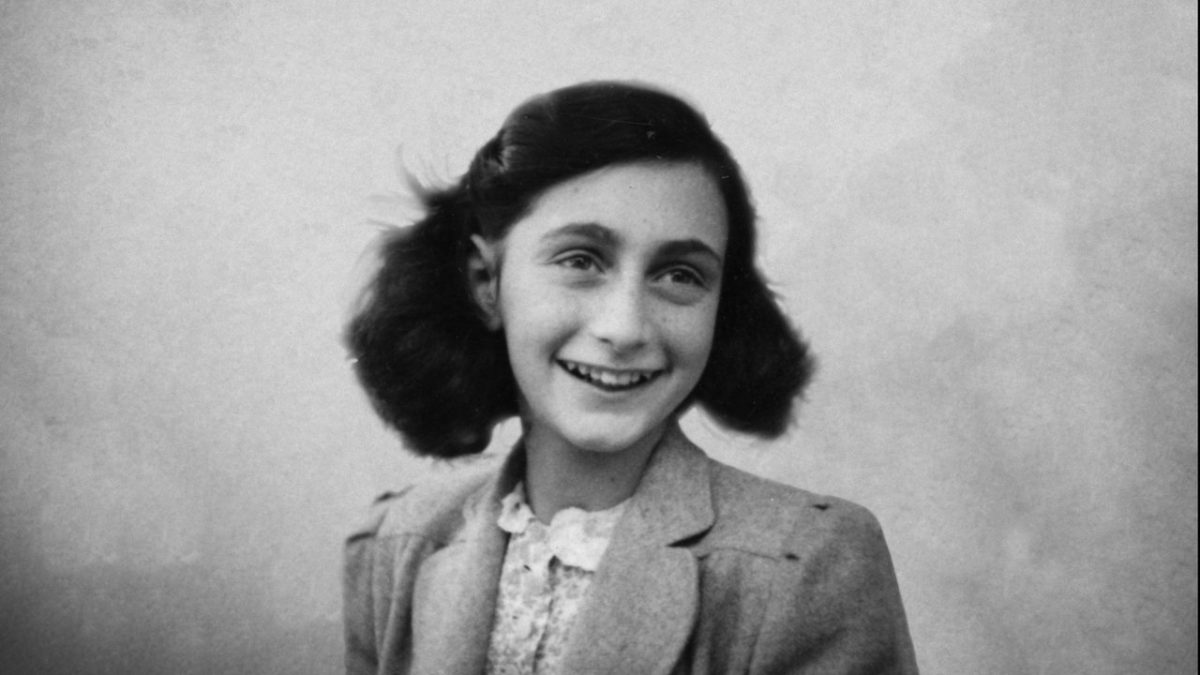
Anne Frank (Annelies Marie Frank, 12 June 1929 to about February or March 1945) was a German-born Jewish diarist and Holocaust victim. She gained worldwide notability posthumously for keeping a diary documenting her life in hiding during the German occupation of the Netherlands. In the diary she regularly described her family's everyday life in their hiding place in a secret annex in Amsterdam from 1942 until their arrest in 1944. She died in the Bergen-Belsen concentration camp, probably of typhus, a few months later. This biography follows her life and the diary that became her legacy.
Anne Frank at a Glance
| Birth name | Annelies Marie Frank |
| Born | 12 June 1929, Frankfurt, Germany |
| Died | About February or March 1945, Bergen-Belsen concentration camp, Germany |
| Parents | Otto Frank and Edith Frank (nee Hollander) |
| Sister | Margot Frank |
| Best known for | The Diary of a Young Girl |
| Time in hiding | July 1942 to August 1944 |
| Arrested | 4 August 1944 |
Childhood in Frankfurt
Anne Frank was born on 12 June 1929 at the Maingau Red Cross Clinic in Frankfurt to Edith (nee Hollander) and Otto Heinrich Frank, and she had an older sister, Margot. The Franks were Reform Jews, who did not practise all the customs and traditions of Judaism, and they lived in an assimilated community of Jewish and non-Jewish citizens. Edith and Otto were devoted parents with an interest in scholarly pursuits, and they had an extensive library and encouraged the children to read. In 1933, after the Nazi Party won the federal election and Adolf Hitler was appointed chancellor, Edith and the children went to stay with her mother, Rosa Hollander, in Aachen, while Otto, who had received an offer to start a company in Amsterdam, moved there to organise the business and arrange accommodation for his family. Anne stayed with her grandmother until February 1934, when the entire family reunited in Amsterdam. The Franks were among 300,000 Jews who fled Germany between 1933 and 1939.
Life in Amsterdam
In Amsterdam, Anne joined the 6th Montessori School in 1934 and soon felt at home there, meeting children of her own age, such as Hanneli Goslar, who would become one of her best friends. Twenty-three years later, in 1957, the school was renamed the Anne Frank School in her memory. Otto worked at the Opekta Works, a company that sold pectin, and in 1938 he started a second company, Pectacon, a wholesaler of herbs, pickling salts and mixed spices. In May 1940 Germany invaded the Netherlands, and the occupation government began to persecute Jews by implementing restrictive and discriminatory laws. Otto tried to arrange for the family to emigrate to the United States, but his visa application was never processed because the US consulate in Rotterdam was destroyed by German bombing on 14 May 1940, resulting in the loss of all the paperwork there. On 22 July 1941 Anne was filmed watching her neighbours' marriage ceremony from her balcony; it is the only known footage of her taken during her lifetime. After the summer holidays in 1941, she was no longer allowed to attend the Montessori School, because Jewish children had to attend Jewish schools, and she and her sister went to the Jewish Lyceum.
Hiding in the Secret Annex
The family went into hiding in July 1942. The Franks' apartment was left in disarray to create the impression that they had left suddenly, and Otto left a note that hinted that they had gone to Switzerland. Because Jews were not allowed to use public transport, Otto, Edith and Anne walked several kilometres from their home, while Margot cycled to the Prinsengracht with Miep Gies. Victor Kugler, Johannes Kleiman, Miep Gies and Bep Voskuijl were the only employees who knew of the people in hiding, and, together with Gies's husband Jan and Voskuijl's father, they were the "helpers" who kept the occupants informed of war news, supplied them with food and ensured their safety, aware that they could face the death penalty if caught. On 13 July 1942 the Franks were joined by the Van Pels family, Hermann, Auguste and their 16-year-old son Peter, and in November by Fritz Pfeffer, a dentist and friend of the family. Tensions quickly developed in such confined conditions. Anne clashed with Auguste van Pels and found Pfeffer, with whom she shared a room, insufferable, but she later recognised a kinship with Peter, and the two entered a romance. Otto recalled that her closest friendship was with Bep Voskuijl.
The Diary
For her thirteenth birthday on 12 June 1942, Anne received an autograph book, bound with red-and-white checkered cloth and with a small lock on the front. She decided to use it as a diary. As persecution of the Jewish population increased in July 1942, the family went into hiding in a secret annex concealed behind a bookcase in the building where Otto worked. In the diary Anne regularly described the everyday life of the family in the hiding place from 1942 until their arrest.
Arrest and Deportation
The family were arrested two years later by the Gestapo, on 4 August 1944. The Franks were transported to the Westerbork transit camp and then to Auschwitz-Birkenau. On 1 November 1944 Anne and her sister Margot were transferred from Auschwitz to the Bergen-Belsen concentration camp, where they died, presumably of typhus, a few months later. The Red Cross estimated that they died in March 1945, with the Dutch authorities setting 31 March as the official date, although later research suggests that they may have died in February or early March.
Publication of the Diary
Otto Frank, the only Holocaust survivor of the family, returned to Amsterdam after the war to find that Anne's diary had been saved by his secretaries, Miep Gies and Bep Voskuijl. Moved by his daughter's repeated wishes to be an author, he published the diary in 1947. It was translated from its original Dutch version, Het Achterhuis ("the back house"), and first published in English in 1952 as The Diary of a Young Girl, and it has since been translated into over 70 languages.
Legacy
With the publication of the diary, Anne became one of the most discussed Jewish victims of the Holocaust. One of the world's best-known books, the diary is the basis for several plays and films. She lost her German citizenship in 1941 and became stateless, and, despite spending most of her life in the Netherlands and being a de facto Dutch national, she never officially became a Dutch citizen. Her words, written by a teenager who wanted to be a writer, remain a powerful testimony to the humanity of the victims of the Holocaust.