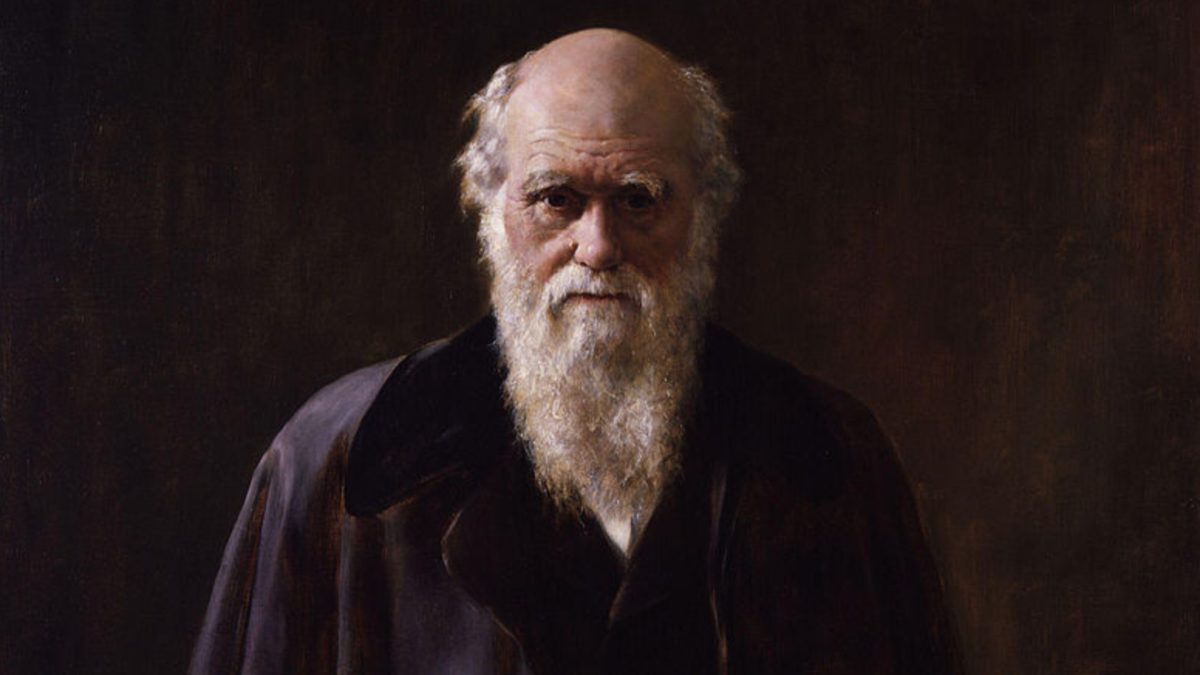
Charles Darwin (12 February 1809 to 19 April 1882) was an English naturalist, geologist and biologist who is best known for the theory of evolution by natural selection. After five years on the voyage of HMS Beagle, he spent more than 20 years developing his ideas, and he published them in On the Origin of Species on 24 November 1859. He died at Down House in Kent at the age of 73 and was buried in Westminster Abbey. This biography follows his life and work.
Charles Darwin at a Glance
| Full name | Charles Robert Darwin |
| Born | 12 February 1809, The Mount, Shrewsbury, Shropshire, England |
| Died | 19 April 1882, Down House, Downe, Kent, England (aged 73) |
| Profession | Naturalist, geologist and biologist |
| Best-known work | On the Origin of Species (published 24 November 1859) |
| Voyage | HMS Beagle, 27 December 1831 to 2 October 1836 |
| Spouse | Emma Wedgwood (married 29 January 1839) |
| Children | Ten |
| Burial | Westminster Abbey |
Early Life and Education
Darwin was born in Shrewsbury to Robert Darwin and Susannah Wedgwood. He studied medicine at the University of Edinburgh but neglected his studies there, and in January 1828 he began a degree at Christ's College, Cambridge.
The Voyage of the Beagle
Darwin was 22 when he joined HMS Beagle as a naturalist as it left on 27 December 1831, and the voyage lasted almost five years, until the ship anchored at Falmouth on 2 October 1836, when Darwin was 27. During the voyage he collected specimens, studied geology and observed wildlife, including on the Galápagos Islands, and these observations shaped his later ideas.
Natural Selection
From 1838 Darwin developed the idea of natural selection. He delayed publishing it for years, and in 1858 he received an essay from Alfred Russel Wallace that described a similar theory, which led to a joint submission of both men's papers to the Linnean Society.
On the Origin of Species
On the Origin of Species was published on 24 November 1859. The first printing was 1,250 copies, and orders from booksellers exceeded it by about 250, so the publisher John Murray asked for a second edition as soon as possible. The book argued that species change over time through natural selection, and it started a debate that continues in public discussions of science and religion. Within a year some 4,250 copies were in circulation, and Darwin was 50 years old when it appeared.
Family
Darwin married Emma Wedgwood on 29 January 1839, when he was 29, and they had ten children. His daughter Annie became ill in 1851 and died in the same year. The family lived at Down House in Kent.
Honours and Death
The Royal Society awarded Darwin its Copley Medal in 1864. He died at Down House on 19 April 1882, aged 73, and he was buried in Westminster Abbey.
Legacy
Darwin's theory is the basis of modern biology, and it has been strengthened by later discoveries in genetics and palaeontology. He is remembered as one of the most influential scientists in history, and his burial in Westminster Abbey reflects the national honour in which he was held.