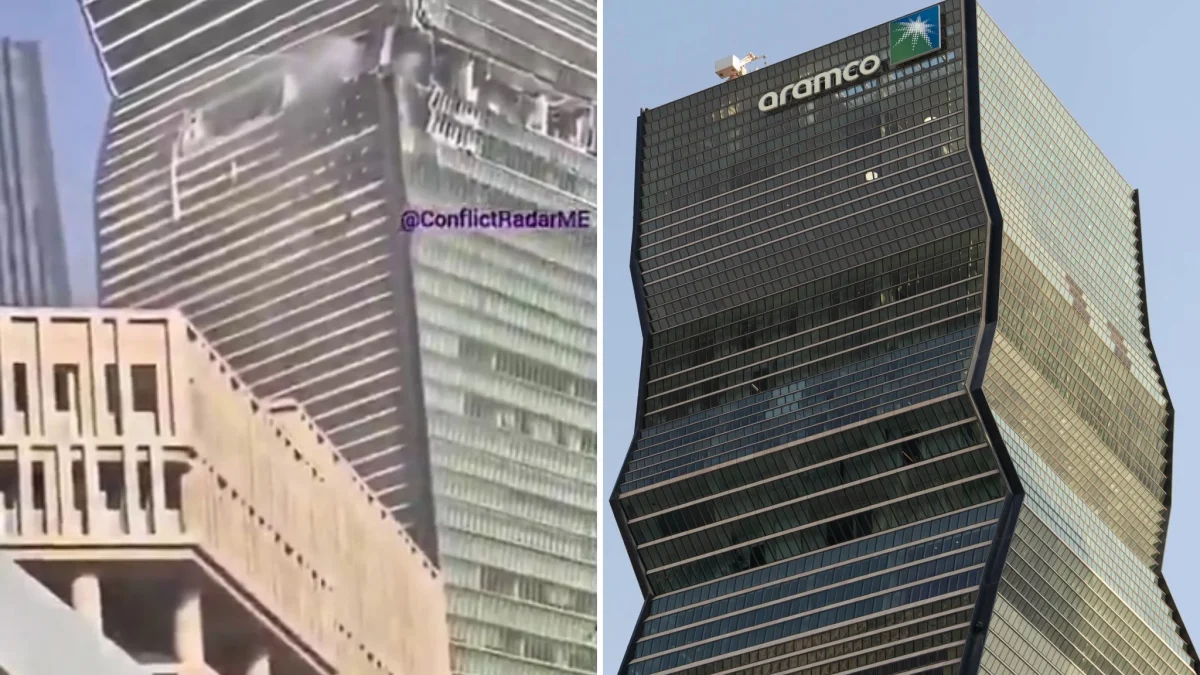
The Aramco Tower, a skyscraper in the Saudi capital's central financial district, was hit in an air attack at the weekend, according to the BBC. A statement issued through the Houthi-controlled Saba news agency confirmed the group had targeted Riyadh's business zone, without naming the tower. The Saudi energy ministry said the building had suffered only "minor damage" and that no one had been killed or injured. Footage authenticated by BBC Verify, however, shows more extensive damage, with windows shattered on more than one level and at least one floor appearing to have been badly hit by a missile or drone. The Houthis also said they had targeted Riyadh's airport and Aramco oil storage facilities, while Saudi Arabia said its air defences had intercepted and destroyed several missiles.
The Houthis say the strikes were retaliation for Saudi attacks, and the day's events moved quickly. Houthi media said at least 33 people, including women and children, were killed in a Saudi air strike on al-Shariyah, a town to the east of the capital Sanaa, and Saba said 39 people were injured. The Houthi-run Al Masirah channel showed rescuers pulling bodies from the rubble of several buildings, among them young children. Saudi Arabia did not comment on the claim, and the casualty figures come from Houthi-run media, so they have not been independently confirmed. A Houthi leader, Mahdi al-Mashat, vowed that the group would take revenge for the latest attacks in Yemen.
The Saudi account is that the attack failed, which is the case Riyadh has made throughout. The energy ministry described the damage to the Aramco building as minor and, according to the BBC's reporting, said it was caused by falling shrapnel from an attempted attack, with Saudi-led coalition forces saying they intercepted a missile heading for the capital hours before the al-Shariyah strike. The gap between that description and what BBC Verify found in the footage matters, because it shows a Gulf power with an interest in downplaying the reach of the Houthis into its capital. The BBC describes the strikes as the latest claimed by the Yemen-based group against targets deep inside Saudi Arabia, which the Gulf state has struggled to contain in recent months.
The origins of the escalation lie in the wider war. A Saudi-led coalition has been fighting the Houthis for more than a decade in support of Yemen's internationally recognised government, which has lost control of a large part of the country to the rebels. The conflict had been largely dormant for several years, but fighting intensified after the outbreak of the Iran war. An informal ceasefire unravelled in July after the Tehran-backed Houthis announced a "maritime embargo" against Saudi Arabia and began missile and drone attacks on Saudi airports, oil facilities and tankers in the Red Sea. The Houthis said they were retaliating for what they call a Saudi blockade of their territory and for an air strike on Sanaa airport, which Saudi Arabia said was meant to stop an Iranian aircraft from landing there.
The human toll is rising on both sides of the border. The United Nations says more than 1,600 people have been killed and more than 300,000 displaced since fighting resumed, and a separate attack on a market in Taiz province, which has been a focus of recent fighting, is reported to have killed 30 people, with the Houthis blaming the Saudis and government forces blaming the Houthis for a missile. Major fighting has resumed on the ground between Houthi forces and troops aligned with the Saudi-backed government. With the Houthis now hitting Riyadh's business district and promising revenge for the latest Saudi strike, the direct risk is a cycle of attacks on energy infrastructure and on towns, and the people most exposed are civilians in Yemen and workers in Saudi cities.