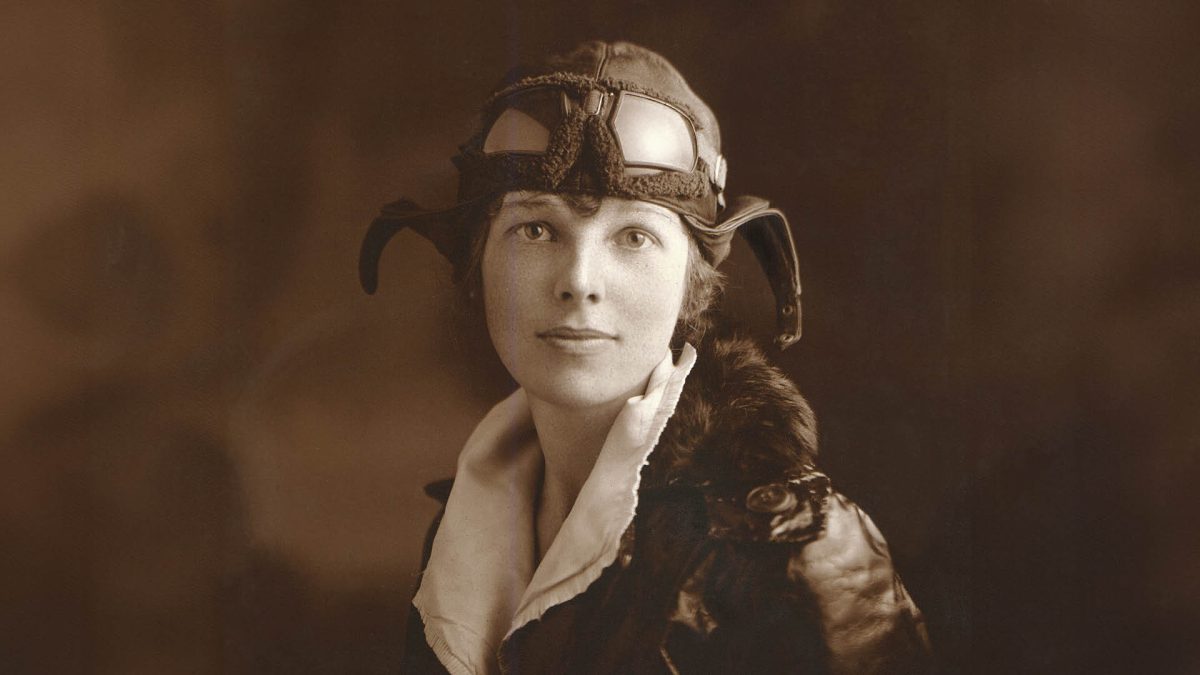
Amelia Earhart (Amelia Mary Earhart, born 24 July 1897; disappeared 2 July 1937; declared dead 5 January 1939) was an American aviator who became one of the most celebrated aviation pioneers. In 1928 she was the first woman to cross the Atlantic by aeroplane, and in 1932 she became the first woman to make a nonstop solo transatlantic flight. She disappeared over the Pacific Ocean in 1937 with her navigator Fred Noonan while attempting to become the first female pilot to circumnavigate the world. This biography follows her life and the mystery of her disappearance.
Amelia Earhart at a Glance
| Full name | Amelia Mary Earhart |
| Born | 24 July 1897, Atchison, Kansas, United States |
| Disappeared | 2 July 1937, over the Pacific Ocean (declared dead 5 January 1939) |
| Profession | Aviator and author |
| Best known for | First woman to fly nonstop solo across the Atlantic (1932) |
| Honour | Distinguished Flying Cross |
| Navigator on final flight | Fred Noonan |
| Aircraft on final flight | Lockheed Model 10 Electra |
| Organisation | Co-founder of the Ninety-Nines, an organisation for women pilots |
Childhood in Kansas
Amelia Earhart was born on 24 July 1897 in Atchison, Kansas, in the home of her maternal grandfather, Alfred Gideon Otis, a former judge and the president of Atchison Savings Bank. Her father, Edwin, was a lawyer, and her mother was Amy Otis. She was the second child of the marriage, and her younger sister, Grace Muriel, was nicknamed "Pidge". Their upbringing was unconventional: Amy did not believe in raising her children to be "nice little girls". The sisters explored their neighbourhood daily, climbing trees, hunting rats with a rifle and sledding, and in 1904 Earhart built a homemade ramp modelled after a roller coaster and secured it to the roof of the family tool shed. After her first documented "flight" she emerged from the broken box that had served as a sled with a bruised lip, a torn dress and a sensation of exhilaration, saying: "Oh, Pidge, it's just like flying!"
Family Troubles and Education
In 1907 her father's job with the Rock Island Railroad led to a move to Des Moines, Iowa, and in 1908, at the age of 10, Earhart saw her first aircraft at the Iowa State Fair. She later described the biplane as "a thing of rusty wire and wood and not at all interesting". The family's finances appeared to improve, but it soon became clear that her father was an alcoholic, and in 1914 he was forced to retire. Earhart later described the sale of the Otis house after her grandmother's death as the end of her childhood. She graduated from Hyde Park High School in Chicago in 1916 and kept a scrapbook of newspaper clippings about successful women in male-dominated careers. She began junior college at the Ogontz School in Pennsylvania but did not complete her programme.
Learning to Fly
On 28 December 1920 Earhart and her father attended an "aerial meet" at Daugherty Field in Long Beach, California, and she asked her father to inquire about passenger flights and flying lessons. She was booked for a passenger flight the following day at Emory Roger's Field, and she took the 10-minute flight.
Nursing
During Christmas vacation in 1917 Earhart visited her sister in Toronto, where she saw wounded soldiers returning from the First World War. After training as a nurse's aide with the Red Cross, she began working with the Voluntary Aid Detachment at Spadina Military Hospital.
Atlantic Flights
She saved 1,000 dollars for flying lessons and had her first lesson on 3 January 1921 at Kinner Field near Long Beach, California. In 1928 Earhart became the first woman to cross the Atlantic by aeroplane, as a passenger. The flight left on its first leg to Trepassey, Newfoundland, and arrived there on 5 June after poor weather forced the pilot, Wilmer Stultz, to make an unexpected landing in Halifax, Nova Scotia. The plane, named Friendship by its owner to honour the relationship between the United States and Britain, left from Newfoundland, and Earhart recorded the journey in her book 20 Hrs. 40 Min. (1928). In 1932 she became the first woman to make a nonstop solo transatlantic flight, and was awarded the Distinguished Flying Cross for her achievement. Her records included being the first woman to fly an autogyro in 1931, the first person to fly the Atlantic twice in 1932 and the first person to fly solo from Honolulu to Oakland in 1935, and she was the first woman to receive the Distinguished Flying Cross. She served as aviation editor for Cosmopolitan from 1928 to 1930 and wrote The Fun of It (1932) and Last Flight (1937). In 1935 she also joined Purdue University as a visiting faculty member to counsel women on careers. She was one of the first aviators to promote commercial air travel, wrote best-selling books about her flying experiences and helped to found the Ninety-Nines, an organisation for women pilots.
The Final Flight
The Amelia Earhart Fund for Aeronautical Research gave 50,000 dollars to buy a Lockheed Electra 10E, which the Lockheed Aircraft Company built in July 1936 with extra fuel tanks and extensive modifications. The plan was for Noonan to navigate from Hawaii to Howland Island, a difficult portion of the flight. On 2 July 1937 Earhart and her navigator Fred Noonan disappeared over the Pacific Ocean in a twin-engine Lockheed Model 10 Electra while attempting to become the first female pilot to circumnavigate the world. Her husband, G. P. Putnam, asked the probate court in Los Angeles to waive the seven-year waiting period so that he could manage her finances and pay for the searches, and she was declared legally dead on 5 January 1939. Since her disappearance, Earhart has become a global cultural figure, and numerous films, documentaries and books have recounted her life.
Legacy
Earhart's courage in a field dominated by men made her an inspiration to later generations of women in aviation, and the unsolved mystery of her last flight has kept her story in the public imagination for nearly nine decades. Her books and records, and the organisation she helped to found, remain part of the history of flight.