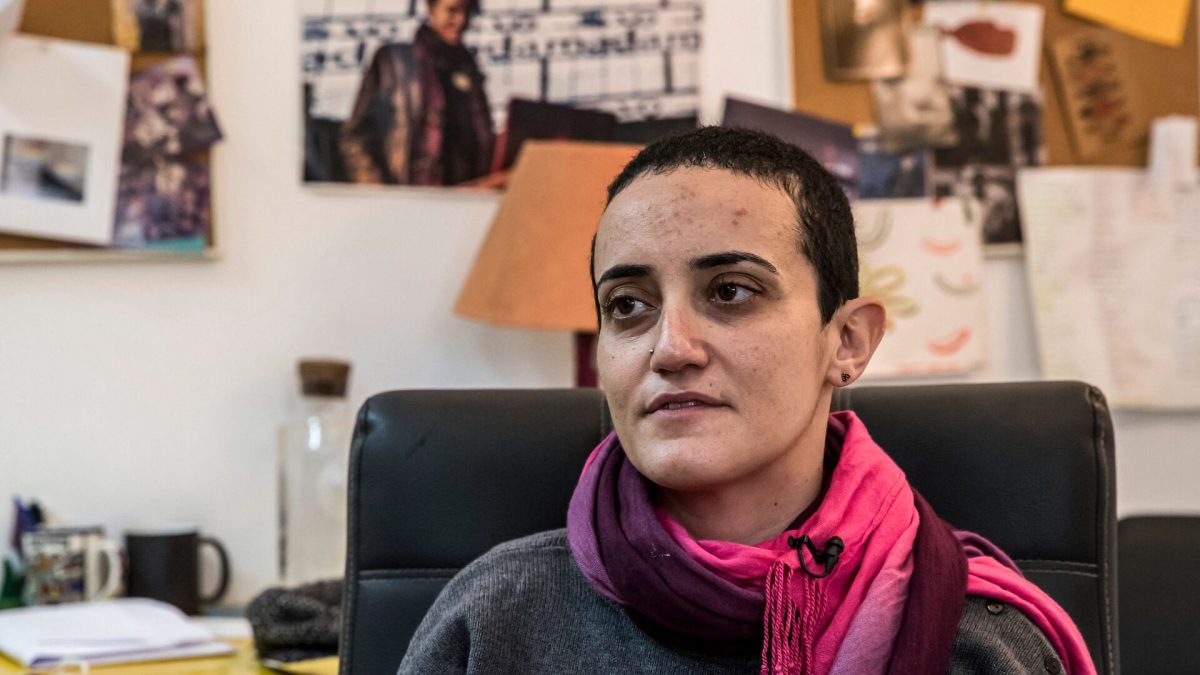
A criminal court in Cairo has postponed the retrial of the prominent Egyptian journalist Lina Attalah, whose case has drawn international condemnation. The opening hearing on Wednesday was adjourned until 18 November after defence lawyers for the editor-in-chief of the news outlet Mada Masr requested a new judge. The United Nations has warned of widening assaults on press freedom by Egyptian authorities, including the targeting, persecution and harassment of independent journalists. Last month, a separate court convicted Attalah of running a website without a licence and fined her 3 million Egyptian pounds, about $56,000, and ordered Mada Masr to shut down.
Critics of the prosecution say it forms part of a broader squeeze on independent media. Attalah says she had tried in vain for years to obtain a licence, and after last month's trial she discovered that a court had previously given her a one-year prison sentence without her knowledge, for spreading false news and operating a website without a licence. That sentence was issued in absentia in 2024, even though she was in the country. Egypt ranks 169th out of 180 countries for press freedom in Reporters Without Borders' 2026 analysis, and the group says at least 26 journalists arrested in recent years remain in detention. In September, six journalists with the fact-checking platform Matsda2sh, its entire newsroom, were arrested in home raids and held incommunicado for nearly a week. They face terrorism charges, and their lawyers report that several were beaten and electrocuted in detention.
The case also has procedural and legal dimensions that the authorities can point to. Attalah was convicted by the New Cairo Misdemeanours Court on a licensing offence, and the retrial was delayed on Wednesday because her own defence team asked for the judge's recusal, arguing that he had already formed a conviction against her. The judge adjourned proceedings for a week to consider the request, so the delay is part of the court's process. Her appeal against last month's conviction is scheduled for 25 November, which shows that legal avenues remain open. The charges against the Matsda2sh journalists, joining the Muslim Brotherhood and financing terrorism, relate to a movement that has been classed as a terrorist organisation since Abdul Fattah al-Sisi became president in 2014, a year after the military, which he led, removed the Brotherhood-backed president Mohammed Morsi. Their lawyers say no evidence linking them to the Brotherhood has been presented.
The outcome matters for Egypt and the wider region. Mada Masr was set up 13 years ago and became the country's leading independent news site, providing deep coverage of politics and economics as well as regional wars in Libya, Sudan and Gaza, even though since 2017 it could only be viewed from outside Egypt. Most newspapers and television stations now keep to government lines. Attalah told the BBC that the recent crackdown was meant to send a chilling message to the very few newsrooms that are left, and she argued that if outlets doing rigorous reporting disappear, space is created for conspiracies and disinformation. A UN spokesperson, Thameen Al-Kheetan, said her case raises fresh concerns regarding due process and fair trial, and called for the Matsda2sh reporters to be released and all charges dropped.
Attalah's retrial has been delayed by a week, but the questions it raises about press freedom in Egypt are likely to last far longer. The hearing on 18 November and her appeal on 25 November will show how the courts handle one of the country's best-known independent journalists.