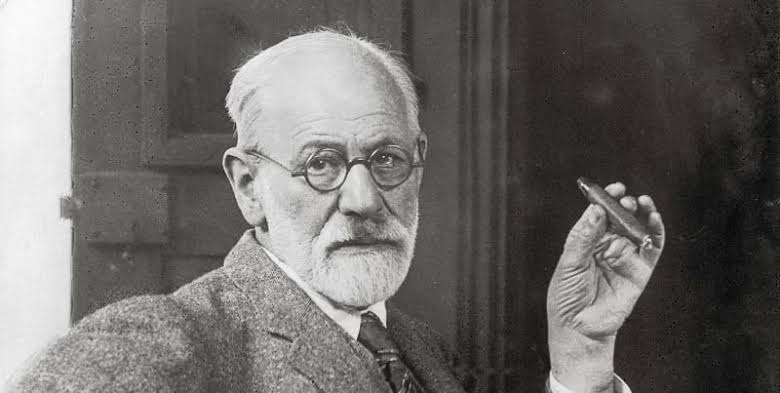
Sigmund Freud (born Sigismund Schlomo Freud, 6 May 1856 to 23 September 1939) was an Austrian neurologist and the founder of psychoanalysis, a clinical method for evaluating and treating pathologies arising from conflicts in the psyche through dialogue between patient and psychoanalyst. He introduced therapeutic methods such as free association and the interpretation of dreams, and he developed the theory of the unconscious and a model of the mind made up of id, ego and superego. He died in exile in London at the age of 83. This biography follows his life and ideas.
Sigmund Freud at a Glance
| Birth name | Sigismund Schlomo Freud |
| Born | 6 May 1856, Freiberg, Moravia, Austrian Empire (now Pribor, Czech Republic) |
| Died | 23 September 1939, London, England (aged 83) |
| Profession | Neurologist and founder of psychoanalysis |
| Education | University of Vienna (MD, 1881) |
| Best-known concepts | The unconscious, free association, the Oedipus complex, id, ego and superego |
| Major work | The Interpretation of Dreams (1899) |
| Spouse | Martha Bernays (married 1886) |
Early Life
Freud was born to Ashkenazi Jewish parents in the Moravian town of Freiberg, in the Austrian Empire, the first of eight children. His father, Jakob Freud, was a wool merchant who had two sons from his first marriage, and his mother, Amalia Nathansohn, was 20 years younger than Jakob and his third wife. The family was struggling financially and living in a rented room when Sigmund was born, and he was born with a caul, which his mother saw as a positive omen for his future. In 1859 the family left Freiberg, and in 1860 they settled in Vienna, where four sisters and a brother were born. In 1865 the family's standing was damaged when Jakob's brother Josef was arrested on suspicion of dealing in counterfeit rubles and was convicted the following year, and Freud later recalled that the affair caused his father's hair to turn grey within a few days.
Education and Medical Training
In 1865, aged nine, Freud entered the Leopoldstadter Kommunal-Realgymnasium in Vienna, where he was an outstanding pupil. He graduated in 1873 with honours and entered the University of Vienna at the age of 17. He loved literature and was proficient in German, French, Italian, Spanish, English, Hebrew, Latin and Greek. He had planned to study law until he attended a public lecture at which Goethe's essay "Nature" was read aloud, which led him to medicine. At the university he studied philosophy under Franz Brentano, physiology under Ernst Brucke and zoology under the Darwinist professor Carl Claus. In 1876 he spent four weeks at Claus's zoological research station in Trieste, dissecting hundreds of eels in an inconclusive search for their male reproductive organs, and in 1877 he moved to Brucke's physiology laboratory, where he spent six years comparing the brains of humans with those of other animals. His research was interrupted in 1879 by a year of compulsory military service, during which he found the time to translate a volume of the works of John Stuart Mill. His research on the biology of nervous tissue proved seminal for the later discovery of the neuron. He graduated with an MD in March 1881.
Career and Marriage
In 1884 he published an influential paper on the palliative effects of cocaine, and his work on aphasia formed the basis of his first book, On Aphasia: A Critical Study, published in 1891. In 1882 Freud began his medical career as a researcher and clinical assistant at Vienna General Hospital, and his time in Theodor Meynert's psychiatric clinic increased his interest in clinical work. He married Martha Bernays in 1886, and the couple had six children, the youngest of whom, Anna Freud, became a psychoanalyst. In October 1885 Freud went to Paris on a three-month fellowship to study with Jean-Martin Charcot, a renowned neurologist who was conducting research into hypnosis, and he later recalled the experience as catalytic in turning him towards psychology. Back in private practice in Vienna in 1886, he began using hypnosis in his clinical work, adopting the approach of his friend and collaborator Josef Breuer. On 8 December 1897 he was initiated into the Jewish cultural association B'nai B'rith, to which he remained linked all his life. He set up a private practice treating nervous disorders, and he developed the method of free association, in which patients were asked to say whatever came into their minds.
Psychoanalysis and The Interpretation of Dreams
Freud's most influential book, The Interpretation of Dreams, appeared in 1899. In it he argued that dreams are wish fulfilments and that analysing them could reveal the workings of the unconscious mind. He later set out his theory of the Oedipus complex, which holds that children pass through stages of infantile sexuality, and he proposed a model of the mind consisting of the id, ego and superego. His ideas about the libido and a death drive shaped his later work, and he also wrote critical studies of religion and culture.
Controversy
Freud's work has always been controversial. Critics have questioned the scientific status of psychoanalysis and its therapeutic efficacy, and his views on sexuality have been debated, including by feminist writers who ask whether the theory advances or hinders the feminist cause. Nonetheless, his ideas have suffused Western thought and popular culture, and the poet W. H. Auden described him in 1940 as "no more a person now but a whole climate of opinion / under whom we conduct our different lives".
Exile and Death
From 1891 until they left Vienna in 1938, Freud and his family lived in an apartment at Berggasse 19. After the Nazi annexation of Austria in 1938, Freud, who was Jewish, left Vienna with his family and in September 1938 established a new home at 20 Maresfield Gardens in Hampstead, London, where he died on 23 September 1939 at the age of 83. He had begun smoking at the age of 24 and become a cigar smoker, believing that smoking enhanced his capacity to work. A series of operations on his cancerous jaw left him with a prosthetic device that seriously impaired his speech, and by mid-September 1939 the cancer was causing severe pain and had been declared inoperable.
Legacy
The 1922 Berlin Congress was the last that Freud attended, as by then his speech was seriously impaired. Though psychoanalysis is less prevalent in diagnostic and clinical practice than it once was, it remains influential within psychology, psychiatry and psychotherapy and across the humanities. Terms such as the unconscious, repression and the Freudian slip have entered everyday language, and his work continues to be debated nearly a century after his death.