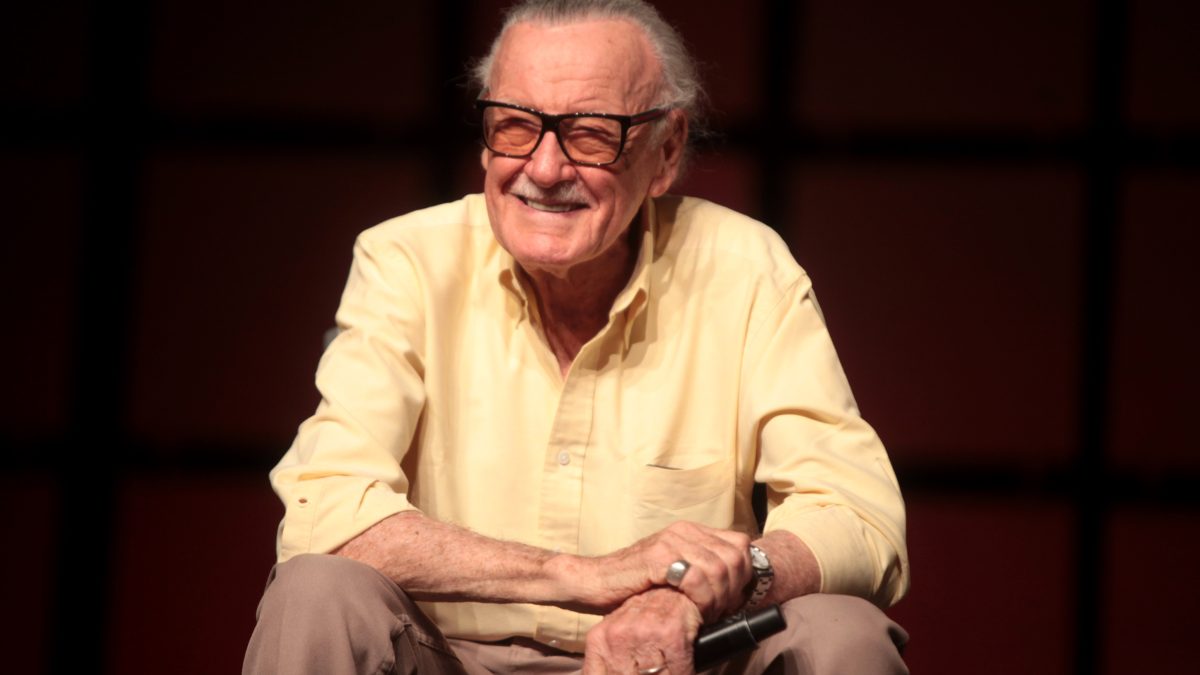
Stan Lee (28 December 1922 to 12 November 2018) was an American comic book writer, editor, publisher and producer. Born Stanley Martin Lieber, he rose through the ranks of a family-run business called Timely Comics, which later became Marvel Comics, and was its primary creative leader for two decades, expanding it from a small publishing house division into a multimedia corporation. This biography follows his life, career and legacy.
Stan Lee at a Glance
| Full name | Stanley Martin Lieber, known as Stan Lee |
| Born | 28 December 1922, Manhattan, New York City, United States |
| Died | 12 November 2018, Los Angeles, California (aged 95) |
| Profession | Comic book writer, editor, publisher and producer |
| Company | Timely Comics, later Marvel Comics |
| Co-created characters | Spider-Man, X-Men, Iron Man, Thor, Hulk, Fantastic Four, Black Panther and others |
| Wife | Joan Clayton Boocock (married 1947; died 2017) |
| Honour | National Medal of Arts (2008) |
Early Life
Lee was born Stanley Martin Lieber on 28 December 1922 in the Upper West Side of Manhattan, to Romanian-born Jewish immigrant parents, Celia (née Solomon) and Jack Lieber. His father, a trained dress cutter, worked only sporadically after the Great Depression, and the family moved to Washington Heights and later the Bronx. Lee had a younger brother, Larry Lieber. As a child he was influenced by books and films, especially those with Errol Flynn, and he called the title character of The Scarlet Pimpernel "the first superhero I had read about".
He attended DeWitt Clinton High School in the Bronx and dreamed of writing "the Great American Novel". He worked part-time jobs, including writing obituaries for a news service and press releases for the National Tuberculosis Center, and he graduated from high school early.
Joining Timely Comics
Lee rose through the ranks of Timely Comics, a family-run business which later became Marvel. By the late 1950s he was an editor and writer looking for a way out of comics, until the publisher Martin Goodman assigned him to create a new superhero team in response to the success of DC Comics' revived Flash and Justice League of America. Lee's wife suggested that he experiment with stories he preferred, since he had nothing to lose.
The Marvel Revolution
Lee gave his superheroes a flawed humanity. Before this, most superheroes had been idealistically perfect people with no serious, lasting problems. Lee introduced complex, naturalistic characters who could have bad tempers, fits of melancholy and vanity, who bickered with each other, worried about paying bills and impressing girlfriends, and sometimes got ill. The first characters he created with the artist Jack Kirby were the Fantastic Four in 1961, and their immediate popularity led Lee and the Marvel artists to produce a flood of new titles.
With Kirby, he co-created the Hulk, Thor, Iron Man and the X-Men; with Bill Everett, Daredevil; and with Steve Ditko, Doctor Strange and Marvel's most successful character, Spider-Man. He also co-created Ant-Man, the Wasp, Black Panther, the Scarlet Witch and Black Widow. In the 1970s he challenged the restrictions of the Comics Code Authority, indirectly leading to changes in its policies, and in the 1980s he pursued the development of Marvel properties in other media, with mixed results.
Beyond Marvel
Lee stepped away from regular duties at Marvel in the 1990s, though he continued to receive an annual salary of $1 million as chairman emeritus. In 1998 he and Peter Paul began an internet-based superhero studio, Stan Lee Media, which filed for Chapter 11 bankruptcy protection in February 2001 after investigators found illegal stock manipulation by Paul and another officer. Lee was never implicated in the scheme. In 2002 he sued Marvel, claiming the company was failing to pay his share of the profits from films featuring the characters he co-created.
The Cameos
After retiring, Lee remained a public figurehead for Marvel and made frequent cameo appearances in films and television shows based on Marvel properties, receiving an executive producer credit. This made him the actor with the highest-grossing film total ever. The cameos, in which he appeared as a bus driver, a security guard or a bystander, became a tradition that fans looked for in each new film.
Family and Philanthropy
Lee married Joan Clayton Boocock, originally from Newcastle, England, on 5 December 1947. Their daughter Joan Celia "J.C." Lee was born in 1950, and another daughter, Jan Lee, died a few days after her birth in 1953. The family lived in Hewlett Harbor, New York, from 1952 to 1980 and moved to West Hollywood in 1981. The Stan Lee Foundation was founded in 2010 to focus on literacy, education and the arts. His wife of 69 years, Joan, died on 6 July 2017 of complications from a stroke at the age of 95.
Later Years and Death
In 2018 The Hollywood Reporter published a report claiming Lee was a victim of elder abuse, and in August 2018 a restraining order was issued against his business manager Keya Morgan, who was charged in May 2019 with offences including false imprisonment, grand theft of an elder, fraud, forgery and elder abuse. Lee also sued his former business manager, Jerardo Olivarez.
Lee died on 12 November 2018 at Cedars-Sinai Medical Center in Los Angeles after being rushed there for a medical emergency. The cause on his death certificate was cardiac arrest, with respiratory failure and congestive heart failure as underlying causes. Roy Thomas, who succeeded him as editor-in-chief at Marvel, said Lee was still talking about doing more cameos two days before his death.
Papers and Archives
Between 1981 and 2011 Lee regularly donated papers, photographs, recordings and personal effects to the American Heritage Center at the University of Wyoming, covering the period from 1926 to 2011. This archive gives researchers a detailed record of the history of comics in the United States. In 1976 he was also among the cartoonists who illustrated Costello's wall, and he drew Spider-Man.
When the editor Roy Thomas visited him two days before his death to discuss a planned book, The Stan Lee Story, Lee was still talking about more cameos. His last words to Thomas were reportedly "God bless. Take care of my boy, Roy". His body was cremated and his ashes were given to his daughter.
Honours and Legacy
Lee was inducted into the Will Eisner Award Hall of Fame in 1994 and the Jack Kirby Hall of Fame in 1995, and received the National Medal of Arts in 2008. His characters now anchor a global film franchise, and his insistence that heroes should be flawed and human changed the way superhero stories are written. Historians also stress that these characters were created in collaboration with artists such as Kirby and Ditko, whose contribution is now widely recognised.