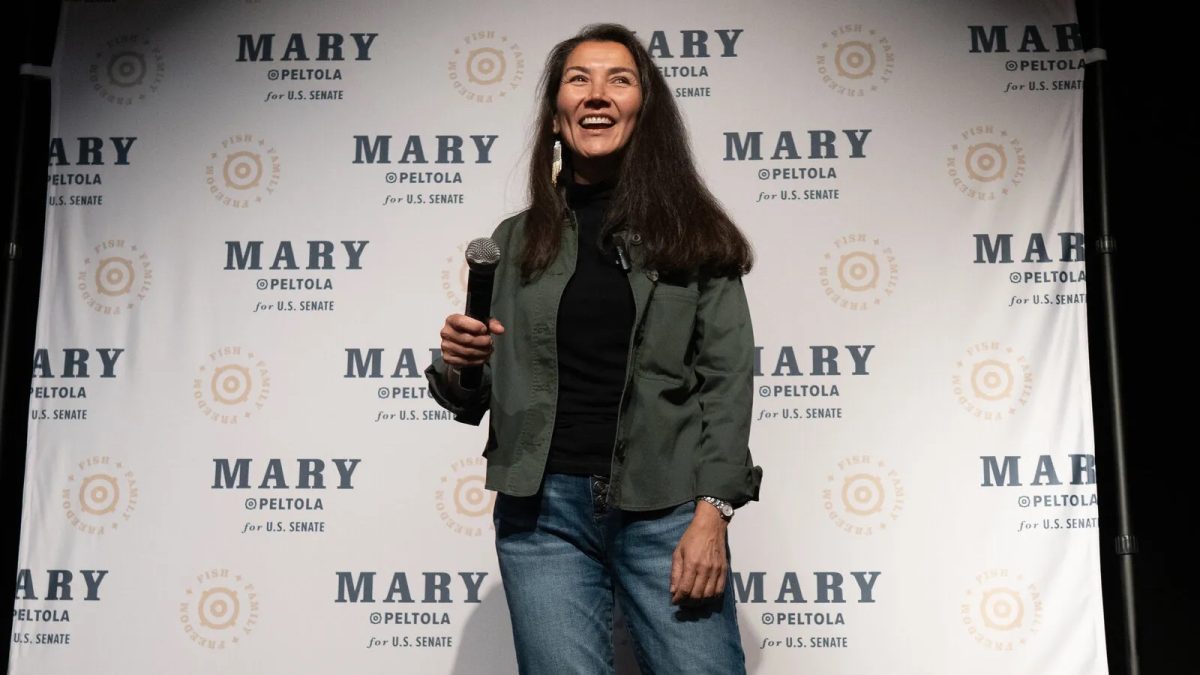
Democrat Mary Peltola has won Alaska's hard-fought Senate race, completing a sweeping Democratic victory in the US upper house in this month's midterm elections. The result, confirmed two weeks after counting began, gives Democrats a 56th Senate seat against 44 for the Republicans, and it follows a turbulent and controversial contest featuring alleged spoiler-candidate recruitment and unprecedented court battles, the BBC reported. It is the ninth seat Democrats have taken from Republicans in the midterms. Together with their win in the House of Representatives, it gives the party control of Congress for the last two years of President Donald Trump's term.
The numbers tell the story of a close finish in a vast state. With 99% of ballots counted, Peltola had slightly more than 50% of the vote, while the Republican incumbent, Senator Dan S Sullivan, trailed on less than 46%. The count took two full weeks after the 3 November poll because of the logistical challenge of collecting ballots from across Alaska's remote expanse, where many communities can be reached only by air or water. Sullivan, a former Alaska attorney general and an ally of Trump, had not commented at the time of the BBC report.
The win carries historic weight. Peltola is the first Alaska Native elected to the US Senate, and the first Democrat to win a Senate seat in Alaska since 2008. It also marks a sharp reversal in a state that Trump won by 13 points in the 2024 presidential election. The BBC said the defeat of the Republican in Alaska caps off a string of losses in the midterms for the president's party, and that many voters across the country cited cost-of-living issues as a factor in how they voted.
Peltola's victory statement leaned on that theme. "The status quo in DC is not working for Alaska," she said, recalling conversations with "elders in tears about empty fish racks" and with parents in rural Alaska "choosing between heating their homes and putting food on the table". She promised Alaskans a more independent voice in Washington and said: "As a lifelong Alaskan who has dedicated my life to serving our state, there is no greater honor than having Alaskans' support in our fight to take on corporate greed, lower costs, and put Alaska first." She added: "I will stand up to anyone to take on the rigged system in DC and deliver results for Alaska's working families." Sullivan, for his part, had campaigned on his record of delivering energy and military investment for the state.
The senior Democrat in the chamber, Chuck Schumer, said Peltola ran "a pitch-perfect campaign devoted to the issues Alaskans care most about", and called the final tally "an unimaginable result even just a few months ago". The Alaska seat had initially been one of several toss-up races that looked like a must-win for Democrats if they wanted control of the Senate. By the time Peltola was declared the winner, the BBC said, the party already had seats to spare, which means the Alaska result extends a majority more than it decides one.
The campaign was not without controversy. The New York Times reported that Peltola's team had worked with people who tried to recruit so-called spoiler candidates, in an alleged attempt to confuse voters. The alleged scheme led to a candidate named Daniel J Sullivan, a complete political unknown who lives in a small coastal town and shares a name with the incumbent Senator Dan S Sullivan, contesting the race. After legal challenges, state courts ruled that Daniel J Sullivan could remain on the ballot, and election officials distinguished the two men on election materials. Peltola denied having knowledge of the alleged plot, but her campaign came under fire, and both the US Justice Department and Alaska's Republican governor said they would launch investigations.
The dispute went further into the courts. The Trump administration filed a lawsuit attempting to stop certification of the results if the incumbent Sullivan lost. A federal judge dismissed that case after legal challenges from Alaska election officials, the Peltola campaign and voting groups. The BBC described the legal fights as unprecedented, and the dismissal removes the immediate obstacle to certification, although the investigations announced by the Justice Department and the governor were not reported as having concluded.
Did the namesake candidate matter? The BBC's analysis suggests not. Alaska uses ranked-choice voting, so voters confused about which Dan Sullivan was the incumbent could simply choose both men, listing them as their first and second choices. If they did, then after the first round any votes for Daniel J Sullivan, who stood little to no chance of winning, would be re-allocated to Dan S Sullivan. Experts told the BBC that this process made it difficult for a spoiler candidate to have any impact. A BBC Verify analysis went further and found that even if every vote for Daniel J Sullivan had gone to the incumbent, Peltola would still have won.
The broader political picture is a shift in the balance of power in Washington. With both chambers in Democratic hands, the president faces an uphill struggle to pass domestic legislation, a point the BBC's China correspondent also made in a separate report on Trump's foreign policy options. Control of the Senate matters for confirmations and oversight as well as for legislation, so the 56-44 majority gives Democrats leverage in areas where the president has relied on a friendly Congress. The party's gains also reflect an electorate focused on prices, which both Peltola's statement and the BBC's reading of voters' reasons highlight.
For Alaska, the result is a mark of change in a state that has not sent a Democrat to the Senate in nearly two decades. For Peltola, it is the start of a Senate term, and a test of whether her pledge to be an independent voice can be reconciled with the demands of a large Democratic caucus. For the country, the long count and the courtroom clashes that preceded it are a reminder of how much logistics, rules and legal challenges can shape the way an election is won, even when the final margin is clear enough to settle the matter.