A fire at a confectionery factory in western Java has killed at least 24 people, and rescuers are still searching the wreckage for dozens of workers who remain missing. The blaze broke out on Saturday evening at the factory in Serang district, in Banten province, around 50km (31 miles) west of the Indonesian capital, Jakarta. Indonesia's authorities have confirmed the death toll after first reporting that three people had died, and officials warn it may rise as teams reach parts of the damaged building where workers were believed to be trapped.
According to Indonesia's National Search and Rescue Agency, rescuers recovered 24 body bags from the site as of Sunday evening. The agency said 15 survivors had been located, while four others were taken to hospital and to a local clinic with undisclosed injuries. Rescuers were searching for around 36 people still missing. Banten Governor Andra Soni told media that about 60 people were believed to have been inside the factory when it caught fire. Local media reported that the search was called off for the night late on Sunday and would resume on Monday.
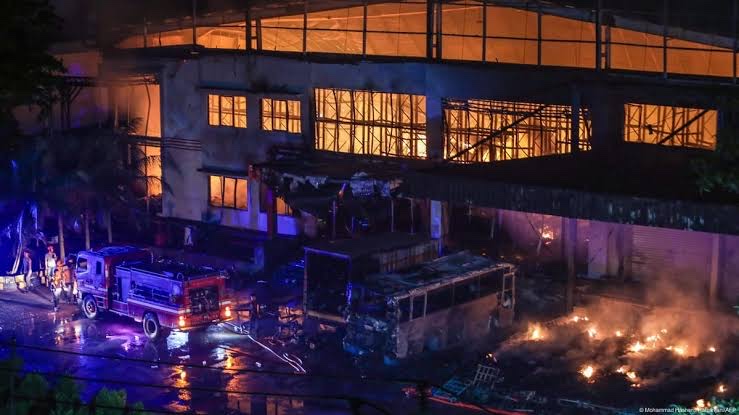
Firefighters were called to the building at 16:30 local time (09:30 GMT) on Saturday, but by the time they arrived it was already engulfed in flames, according to broadcaster Kompas TV, which cited fire official Tubugas Machfudz. "When we arrived (on location)… a large area was already on fire," he said. "So we could not determine whether the company's protection system was functioning properly or not." That statement points to one of the central questions that investigators will now face: whether safety systems such as alarms, sprinklers and fire exits worked as they should.
Photos and footage from the scene showed the large factory consumed by flames during the night, with firefighters battling the blaze. First responders were seen retrieving at least one body from the wreckage on Sunday morning, and firefighters were still tackling some flames hours later. Drone footage captured the aftermath, showing the extent of the damage to the building. Relatives of the missing workers gathered outside the factory, waiting for news, according to local broadcasts cited by AFP.
The factory is owned by PT Fonusa Agung Mulia, according to search and rescue authorities. On LinkedIn, the company describes itself as a subsidiary of UNIFAM, one of Indonesia's largest food and beverage companies. Authorities have not yet determined the cause of the fire. In a statement, the search and rescue agency said all members of the joint team were making "every effort to locate the missing victims while prioritising the safety of personnel on the ground", a reminder of the dangers rescuers themselves face when working inside unstable, burned-out structures.
Industrial fires in confectionery and food plants can spread quickly because of the materials commonly found inside, including packaging, sugar and flammable machinery components. While investigators have not said what happened here, such facilities often contain large quantities of combustible material, and a blaze that is already widespread by the time firefighters arrive can leave workers with little time to escape. The fact that so many people were believed to be inside on a Saturday evening suggests that production was under way, and that a large shift was on site when the fire began.
Factory safety is a recurring concern in Indonesia and across South and Southeast Asia, where rapid industrial growth has often outpaced enforcement of building and fire codes. Past disasters in the region have prompted promises of stricter inspections and penalties, but advocates say compliance remains uneven. The investigation in Serang will be watched for what it reveals about the factory's emergency exits, alarm systems and training, and about whether regulators had inspected the site. Questions of accountability are likely to follow, both for the company and for the authorities responsible for oversight.
For families, the priority is information. Relatives who waited outside the factory over the weekend want to know whether loved ones have been found, and how to identify victims whose remains may be difficult to recognise after a fire of this intensity. Authorities usually coordinate with hospitals and forensic teams on identification, a slow and painful process. Local officials are expected to provide support for the bereaved and for the injured as the full scale of the disaster becomes clear.
Questions will also be asked about what the workers were doing and how the building was laid out when the fire began. In large factories, a single production hall can hold many workers at once, and a fire that spreads across it quickly can cut off the routes people would normally use to leave. Investigators typically examine the number and position of exits, whether doors were open and whether staff had been trained in evacuation, and the answers often determine whether charges or fines follow. The families of the missing will want those findings made public.
The location matters, too. Serang is part of Banten province, a heavily industrialised area on the edge of Greater Jakarta where many factories employ thousands of workers who commute from nearby communities. A disaster at a single plant can therefore affect dozens of families in the same neighbourhoods. The economic loss to those households, many of which rely on the factory wages, adds to the human toll and will require attention from local and national government.
The company's connection to a large national food and beverage group means the incident could have wider repercussions. Regulators and the public will want to know whether the parent company will cooperate with the investigation, provide compensation to victims' families and review safety practices across its facilities. Previous industrial accidents have shown that transparent investigations and clear compensation arrangements are important both for justice and for restoring public trust.
As the search continues on Monday, officials face a difficult task. Teams must move carefully through the debris to avoid further collapses while trying to find the missing. With about 36 people unaccounted for at the latest count, there is little prospect that the death toll will stay at 24. Rescue workers will aim to find survivors for as long as possible, but experience from similar incidents suggests that hopes fade as hours pass.
The fire in Serang is a stark reminder of how quickly an ordinary workday can turn into a tragedy. As Indonesia mourns, attention will turn to what caused the blaze, why so many people were unable to escape, and what must change to prevent a repeat. For now, rescuers continue their work and families wait, holding on to the possibility of good news amid the wreckage.