South African police are investigating the murders of 17 people in two separate shootings on Sunday night, in a fresh reminder of the country's severe problem with gun violence. In KwaZulu-Natal province, eight men were fatally shot in a minibus, and hours later nine people were found shot dead inside a shack in western Pretoria. Police say the two incidents are unrelated, and the motive for both has not yet been established.
In the first case, police responded to reports of a shooting outside the town of Pietermaritzburg and found a white seven-seater vehicle riddled with bullet holes. Inside were eight men with multiple gunshot wounds, and they were declared dead on arrival at the scene. Police spokesperson Robert Netshiunda said it had not been established how the incident happened, adding that officers were collecting pieces of evidence to determine the possible motive for the killings and the identity of the suspects. A manhunt has been launched.
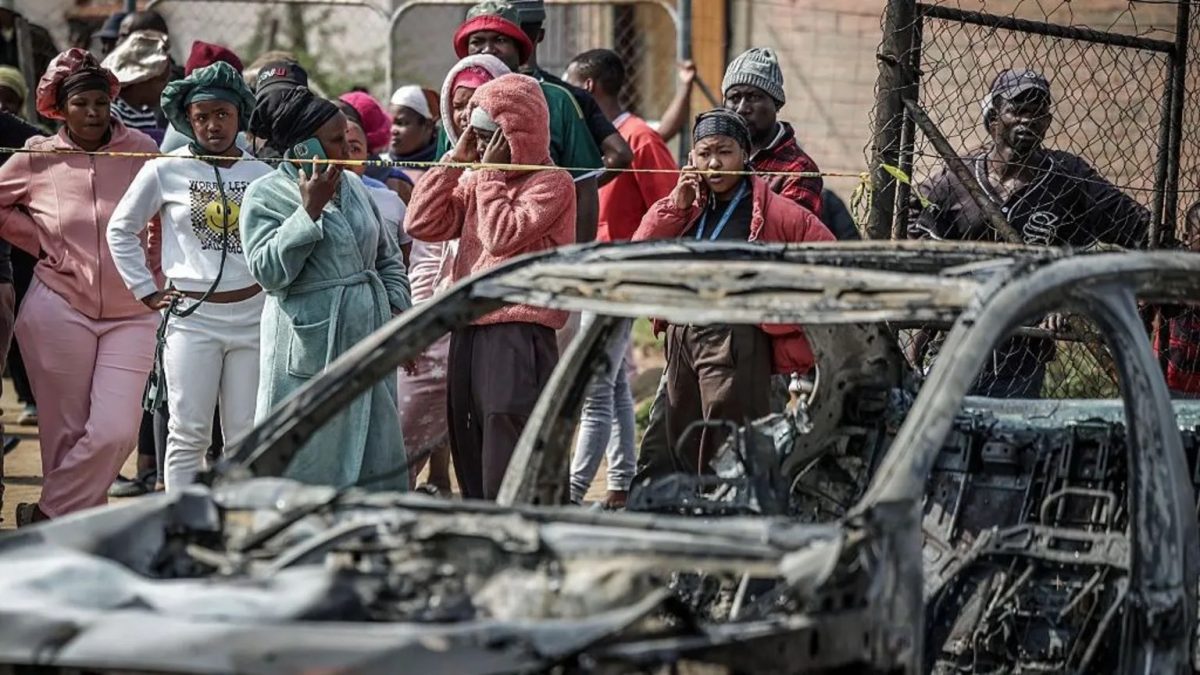
Hours later, in the Jeffsville informal settlement in Atteridgeville, west of Pretoria, police found the bodies of six men and three women. They are believed to have been killed inside a four-room shack between 22:00 and 23:00 on Sunday, and the bodies were scattered across the rooms, with several spent cartridges found outside. Community members told reporters they initially mistook the gunshots for thunder and lightning. Police spokesperson Brigadier Brenda Muridili said the Gauteng provincial commissioner has mobilised the necessary resources, including crime intelligence and a tracking team, to search for the suspect or suspects.
It is not the first mass shooting in the area. In January, five men were shot dead outside a local shop in broad daylight, according to the BBC. And the latest attacks follow a particularly bloody September. Eighteen people were killed when eight gunmen stormed a bar near Johannesburg and opened fire on 25 September, with 14 others injured. The following day, 10 people were killed outside an entertainment venue in a township near Cape Town, and a further 11 were injured. Taken together, those two cases left 28 people dead within about 24 hours.
Behind these incidents is a wider pattern. South Africa has one of the world's highest murder rates, and illegal firearms are widespread. According to the latest police statistics cited by the BBC, 5,427 people were murdered nationwide between April and June 2026, an average of about 60 killings a day. That was a 6% decline compared with the same period a year earlier, which suggests that the overall trend is not uniformly worsening, but the scale remains very high and mass shootings, which are especially traumatic for communities, appear to be a growing feature of the violence.
Much of the violence has been linked to turf wars between gangs involved in drug trafficking and illegal mining, according to the BBC. Police have not said that either of Sunday's attacks was connected to organised crime, and it would be premature to assume so; the motives remain unknown, and it is possible that the shootings arose from different circumstances. But the broader context is that criminal networks with access to illegal weapons operate in many parts of the country, and the police response to such groups has been a persistent political issue.
The government has acknowledged the seriousness of the threat. In February, President Cyril Ramaphosa described organised crime as the "most immediate threat to our democracy, our society and our economic development". Earlier this year, the military was deployed alongside police to five provinces with the highest murder rates, including Gauteng, in an effort to tackle armed violence. Sunday's killings in Gauteng and KwaZulu-Natal, two of the country's most populous provinces, will raise questions about how effective those deployments have been, even if the quarterly murder figures show a modest decline.
For the victims' families and neighbours, the practical questions are immediate. Who were the people killed, and why were they together in a vehicle or a shack late on a Sunday night? Will witnesses come forward in communities where fear of retaliation can keep people silent? The detail that residents mistook the shots for thunder suggests how normal the sound of gunfire can seem in some neighbourhoods, and how difficult it can be for police to collect timely witness accounts. Forensic evidence, including the spent cartridges found outside the Pretoria shack and the ballistic evidence from the minibus, may prove central to the investigation.
The longer-term solutions are well known but hard to deliver. They include tighter control of illegal firearms, better intelligence on criminal groups, improved detective capacity and community trust in policing, and economic opportunity in areas where informal settlements and unemployment fuel crime. Analysts and police officials have repeatedly pointed to firearm circulation as a key factor, because weapons stolen from police stores or diverted from legal channels can end up in criminal hands. None of this is quick, and in the meantime communities live with the consequences.
The social impact of such attacks reaches well beyond the immediate victims. Mass shootings leave neighbours who heard the gunfire, relatives who must identify the dead, and first responders who arrive at scenes with multiple bodies. In informal settlements such as Jeffsville, where homes are close together and security infrastructure is limited, residents may feel that no one can guarantee their safety. In the minibus case, the fact that the victims were travelling together in a seven-seater vehicle will raise questions about whether they were targeted as a group, and public transport users in the area will naturally worry about their own safety on the roads.
There is also an institutional dimension. Every high-profile killing places pressure on detectives, forensic laboratories and prosecutors, and the credibility of the justice system depends on whether cases are solved and suspects convicted. Where convictions are rare, trust erodes and communities may be less willing to cooperate with police, which in turn makes solving crimes harder. Breaking that cycle is one of the central challenges for the authorities, and it is why the early hours of an investigation, when evidence and witness memories are freshest, matter so much.
In the days ahead, the key developments to watch are whether police make arrests in either case, whether they confirm a motive, and whether the authorities announce additional resources for KwaZulu-Natal and Gauteng. For now, 17 people are dead after one night in two provinces, a toll that illustrates the daily reality of violence for many South Africans, and that will keep pressure on the government to show that its anti-crime strategy is working.