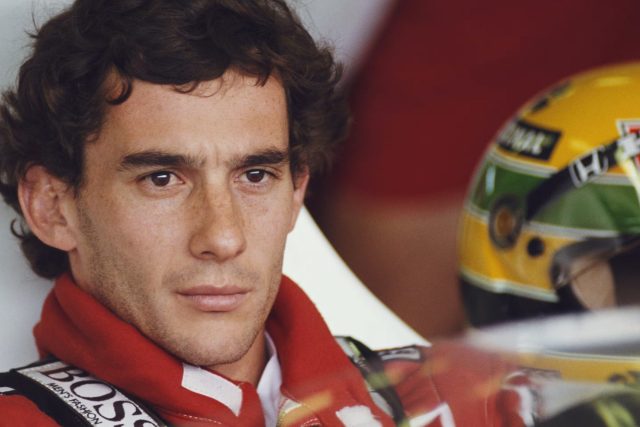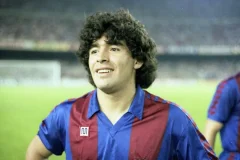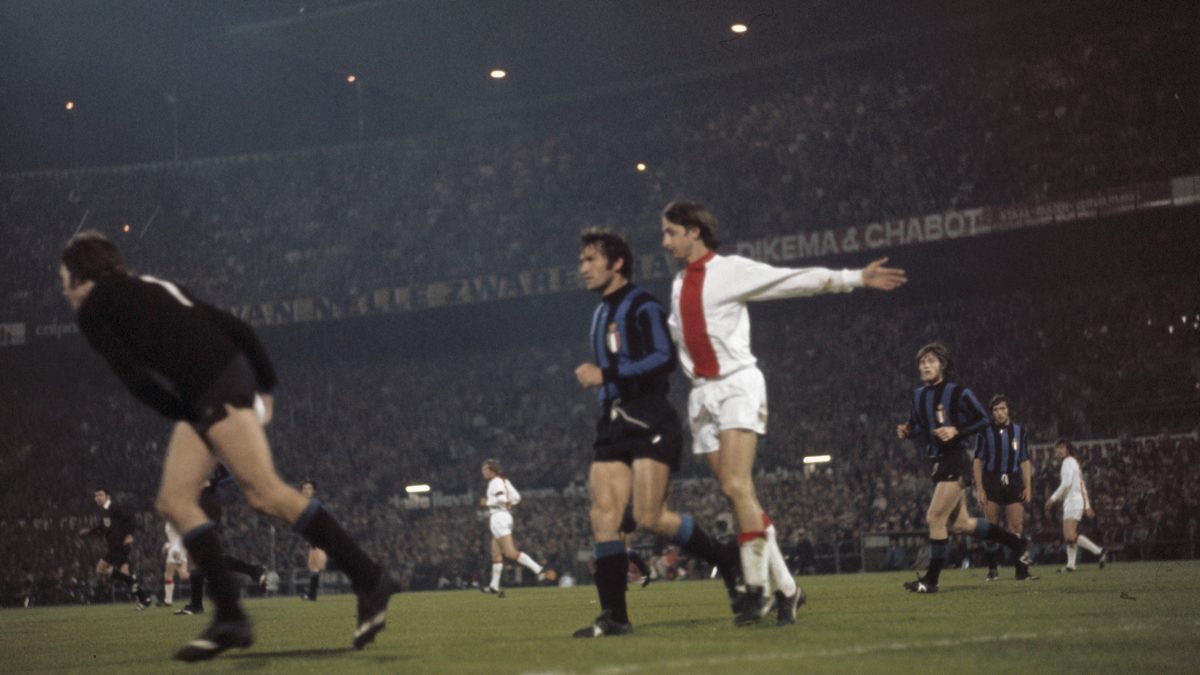
Johan Cruyff (25 April 1947 to 24 March 2016) was a Dutch professional footballer and manager, regarded as one of the greatest players in history and as the greatest Dutch footballer ever. He won the Ballon d'Or three times, in 1971, 1973 and 1974, and was a proponent of the football philosophy known as Total Football. This biography follows his life, career and legacy.
Johan Cruyff at a Glance
| Full name | Hendrik Johannes Cruijff, known as Johan Cruyff |
| Born | 25 April 1947, Amsterdam, Netherlands |
| Died | 24 March 2016 (aged 68) |
| Position | Forward; later manager |
| Clubs | Ajax, Barcelona, Los Angeles Aztecs, Washington Diplomats, Levante, Feyenoord |
| Ballon d'Or | 1971, 1973 and 1974 |
| Major honours | Three European Cups with Ajax; La Liga with Barcelona; 1974 World Cup Golden Ball |
| Wife | Danny Coster (married 1968) |
| Children | Chantal, Susila and Jordi |
Childhood in Betondorp
Hendrik Johannes Cruijff was born on 25 April 1947 at the Burgerziekenhuis in Amsterdam, the second son of Hermanus Cornelis Cruijff and Petronella Bernarda Draaijer, from a working-class background in east Amsterdam. He grew up at Akkerstraat 32 in the Betondorp ("concrete village") neighbourhood, five minutes from the De Meer Stadion, where Ajax played its home games. His father was an Ajax fan, and the family were shaped by Calvinism. At school Cruyff showed inconsistent performance and twice had to repeat a year, and he later suspected that his restlessness was due to ADHD. His older brother Henny was originally considered more talented, but never made the leap to the professional team.
Ajax and the Golden Era
Cruyff joined the Ajax youth system on his tenth birthday, after the youth coach Jany van der Veen, who lived nearby, noticed his talent. He was physically underdeveloped at first, and the head coach Vic Buckingham urged him to go to the gym and eat better. He made his first-team debut on 15 November 1964 in a 3-1 defeat against GVAV Groningen. At Ajax he won six Eredivisie titles, three European Cups and one Intercontinental Cup, in a team that played the Total Football developed by Rinus Michels.
Move to Barcelona
In mid-1973 Cruyff was sold to FC Barcelona for 6 million guilders, approximately US$2 million, in a world-record transfer, after a captaincy vote at Ajax that he lost 8 to 7 to Piet Keizer. In his first season, Barcelona won the La Liga title in 1973-74, the club's first in 14 years. He also won the Copa del Rey once at Barcelona.
The 1974 World Cup
The Netherlands qualified for the 1974 FIFA World Cup, their first appearance in the competition in 36 years. With three goals and three assists, Cruyff led the Netherlands to the final, where they lost to West Germany; he was awarded the Golden Ball as player of the tournament. After finishing third in UEFA Euro 1976, Cruyff refused to play in the 1978 FIFA World Cup after a kidnapping attempt targeting him and his family in their Barcelona home led to his retirement from international football.
Later Playing Career
After Barcelona he played for the Los Angeles Aztecs and the Washington Diplomats in the United States and for Levante in Spain. He returned to Ajax in 1981, winning two more Eredivisie titles, and when the club refused to extend his contract he moved to rivals Feyenoord in 1983, where he won the double of the Eredivisie and the KNVB Cup in his first and only season. He retired from playing in 1984.
Manager and the Dream Team
Cruyff became a highly successful manager. At Ajax he won the 1987 European Cup Winners' Cup, and he returned to Barcelona as coach for the 1988-89 season, when the club had lacked an overarching sporting philosophy since his departure as a player in 1978. At Barcelona he won four La Liga titles and one European Cup, and the side became known as the "Dream Team". He was dismissed in 1996 but remained an adviser to both Ajax and Barcelona. His son Jordi also played professionally for Barcelona.
Foundation and Sayings
Cruyff founded the Johan Cruyff Foundation in 1997 to help disadvantaged children and those with special educational needs. He was also the originator of catchphrases and aphorisms known as "Cruijffiaans" that have entered everyday language, especially in the Netherlands. In 1999 he was voted European Player of the Century in a poll by the International Federation of Football History and Statistics, and came second behind Pelé in its World Player of the Century poll.
Family
At the wedding of his Ajax teammate Piet Keizer on 13 June 1967, Cruyff met Diana Margaretha "Danny" Coster, born in 1949, and they married on 2 December 1968, when he was 21. Her father, Cor Coster, was a Dutch businessman who was also his agent. They had three children: Chantal (born 1970), Susila (born 1972) and Jordi (born 1974). The family lived in Barcelona from 1973, with a six-year interruption from December 1981.
Illness and Death
Cruyff was a chain smoker in his youth, at times smoking up to 80 cigarettes a day. In February 1991 he suffered a heart attack and underwent bypass surgery, after which he quit smoking and took part in anti-smoking campaigns. In October 2015 it was revealed that he had been diagnosed with lung cancer, and in February 2016 he said he felt as if he were leading 2-0 at half-time in his fight against it. The cancer had already spread, and he died on 24 March 2016, surrounded by his family.
Barcelona's Dream Team
When Cruyff returned to Barcelona as coach for the 1988-89 season, the club was going through turbulence on and off the field. In 1986 the team had reached the European Cup final in Seville but lost on penalties to the underdog Steaua Bucharest, a defeat that went down in the club's history as the "Seville trauma". Terry Venables, who had guided the team to its first league title since 1974 in 1985, was under criticism. Cruyff's task was to give Barcelona an overall sporting philosophy, which it had lacked since his departure as a player in 1978.
His later life also had hard moments. He suffered a heart attack in February 1991 and, after the bypass surgery, stopped smoking and symbolically kicked away a cigarette pack in a Catalan health department advertisement. His ashes were scattered in the garden of his summer house.
Legacy
Cruyff's impact on football goes beyond trophies. As a player he embodied a style of movement and intelligence that changed how the game is played, and as a manager he built a philosophy at Barcelona that outlasted his time as coach. He is widely regarded as one of the most influential figures in modern football.