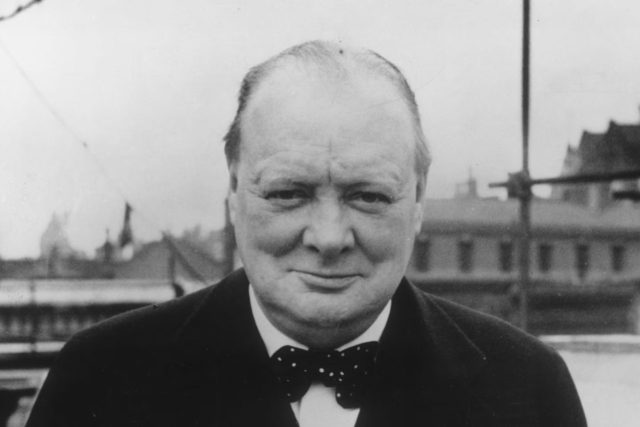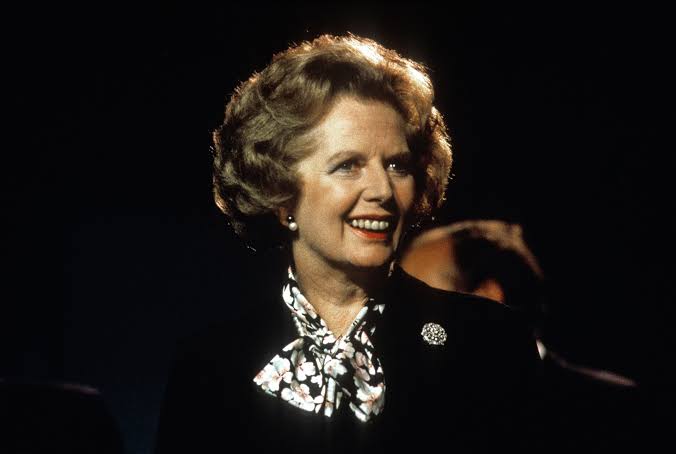
Margaret Hilda Thatcher, Baroness Thatcher (13 October 1925 – 8 April 2013) was a British stateswoman who served as Prime Minister of the United Kingdom from 1979 to 1990 and Leader of the Conservative Party from 1975 to 1990. She was the first woman to hold the office and the longest-serving British prime minister of the 20th century, and her policies became known as Thatcherism.
Margaret Thatcher at a Glance
| Full name | Margaret Hilda Thatcher, Baroness Thatcher (née Roberts) |
| Born | 13 October 1925, Grantham, Lincolnshire, England |
| Died | 8 April 2013, Ritz Hotel, London, aged 87 |
| Profession | Politician, barrister and former research chemist |
| Education | Somerville College, Oxford (chemistry, 1947) |
| Prime minister | 1979 to 1990 |
| Party leader | Conservative Party, 1975 to 1990 |
| Constituency | Finchley (MP from 1959 to 1992) |
| Nickname | The "Iron Lady" |
| Spouse | Denis Thatcher (married December 1951) |
| Children | Carol and Mark (twins) |
Early Life and Education
Margaret Hilda Roberts was born in Grantham, Lincolnshire, the daughter of Alfred Roberts, who owned a tobacconist's and grocery shop, and Beatrice Stephenson. Her father was an alderman and a Methodist local preacher, and he brought her up as a strict Wesleyan Methodist. She won a scholarship to Kesteven and Grantham Girls' School and then studied chemistry at Somerville College, Oxford, graduating in 1947 with a second-class degree. After university she worked as a research chemist at British Xylonite.
Entering Politics
Roberts joined the local Conservative Association and was the party's candidate for the Labour seat of Dartford in the 1950 and 1951 general elections. She married the businessman Denis Thatcher in December 1951, and the couple had twins, Carol and Mark. She qualified as a barrister and was elected the Member of Parliament for Finchley in 1959. Edward Heath appointed her Secretary of State for Education and Science in his 1970–1974 government. In 1975 she defeated Heath in the leadership election to become Leader of the Opposition and the first woman to lead a major British political party. A Soviet journalist dubbed her the "Iron Lady" after a 1976 speech on the Soviet Union.
Prime Minister
Thatcher became prime minister after the Conservatives won the 1979 general election. With her first chancellor, Geoffrey Howe, she lowered direct taxes, raised indirect taxes and set out to cut inflation, and her government privatised state-owned companies and reduced the power of the trade unions. Her popularity fell during the early recession and rising unemployment, but victory in the 1982 Falklands War and a recovering economy helped her win a landslide in 1983.
In 1984 she survived the Provisional IRA's bombing of the Brighton hotel where she was staying, and in 1984–85 her government defeated the National Union of Mineworkers in the miners' strike. In 1986 the deregulation of the financial markets, known as the "Big Bang", began an economic boom. She won a third term in 1987, but her support for the Community Charge, known as the poll tax, was widely unpopular, and her increasingly Eurosceptic views were not shared by others in her cabinet. After a leadership challenge she resigned as prime minister and party leader in November 1990, and John Major, her chancellor, succeeded her.
Later Life and Death
Thatcher left the House of Commons in 1992 and was given a life peerage, which gave her a seat in the House of Lords. In 2005 her daughter Carol revealed that she had dementia. Margaret Thatcher died of a stroke at the Ritz Hotel in London on 8 April 2013, aged 87.
Legacy
Thatcher remains one of the most polarising figures in British politics. Supporters credit her with reversing Britain's economic decline and widening individual freedom, while critics point to unemployment, the miners' strike and the poll tax. Her tenure marked a shift toward market-oriented policies in Britain that is still debated in the 21st century, and she is nonetheless viewed favourably in historical rankings of British prime ministers.