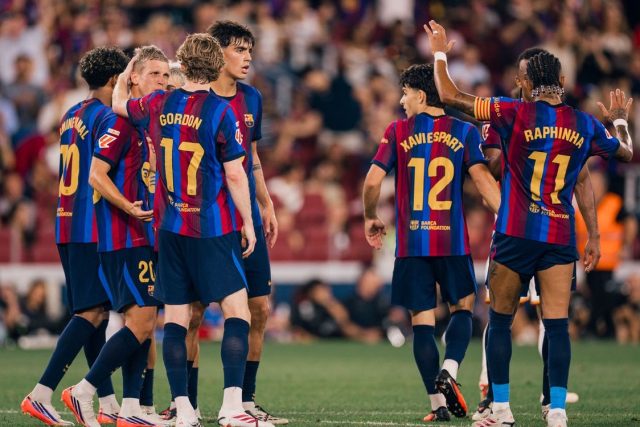
Liverpool thrashed 10-man Manchester United 4-0 at Anfield on Sunday, 22 November 2026, handing Mauricio Pochettino a nightmare start to his reign as United's new head coach. Leny Yoro was sent off in the eighth minute, Liverpool were 2-0 up by the 13th, and two more goals in the second half completed a one-sided win. By the final whistle, the home supporters were singing about Pochettino being sacked and about United "going down", while the Argentine tried to explain a result that left his team 19th in the 20-team Premier League.
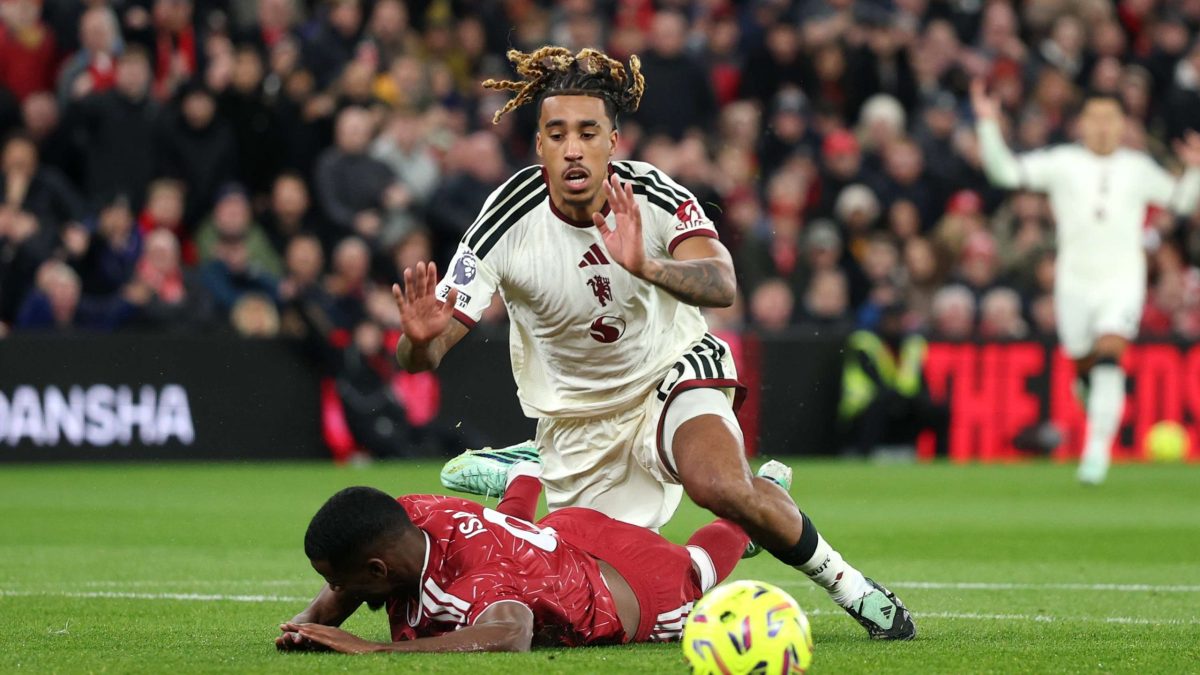
The key moment came early. Ronald Araujo played a long ball upfield for Alexander Isak to run on to, and the Liverpool striker took a touch before Yoro bundled into the back of him and brought him down. Referee Sam Barrott did not hesitate, giving the foul and sending off Yoro for denying an obvious goalscoring opportunity. United, who had made a poor start with weak concentration and mistakes, never recovered. The goal that put Liverpool ahead came from a free-kick, according to United captain Bruno Fernandes, and a second followed within minutes.
The red card became the main talking point. Liverpool's head coach, Andoni Iraola, said the decision was clear. "I think he's the last man, no?" he said. "It's a clear foul and a red card, yes?" Former Liverpool midfielder Danny Murphy said there was "no doubt" about it, and former United defender Gary Neville agreed. "Leny Yoro has to cover and he doesn't," Neville said on Sky Sports. "He reacts late and his anticipation is poor. It's so clumsy from Yoro."
Others saw it differently. Fernandes said that the decision should not have been a red card. "Isak kicks the ball forward, the ball goes into the hands of Senne," he said, referring to United goalkeeper Senne Lammens. "Isak has got no control of the ball, he has no chance to get on the ball." He added that there were "too many referees on the pitch and too many on VAR taking so long to see to make a mistake like this that can change the game", but conceded it was not the reason United conceded from the free-kick. Pochettino, after saying he went to the referee after the final whistle to "present his respect", became more forceful in arguing that Yoro should not have been sent off.
The BBC's analysis called the incident borderline. The key question was whether Isak would definitely have got to the ball ahead of Lammens, since he took a heavy touch before the contact, and whether the chance would have been a good one. If there was any doubt, it should not have been a red card, the analysis said, but the VAR, John Brooks, would not be expected to intervene for anything other than a clear and obvious error, so the on-field decision stood. The debate is likely to continue, but it did not change the result.
The scale of the defeat matters as much as the red card. The 4-0 loss matched the joint-worst result for any new United manager, equalling the 4-0 defeat suffered by Lal Hilditch against Bolton in October 1926. It left United 19th in the table after 11 games, 20 points behind leaders Arsenal. United have conceded 19 goals in their last six games, although Pochettino said he did not want to talk about results before his arrival, when he replaced Michael Carrick. For a club of United's stature, a place in the bottom two is an alarming position, and the fans' chants about relegation reflect real concern.
Pochettino's week had been chaotic. He agreed a two-and-a-half-year contract and began as United head coach on Wednesday, after leaving his job with the United States national team. His final match in charge of the USA was a 2-0 win over Haiti in Cincinnati on Tuesday, after which he flew directly to Manchester on a private jet and landed at about 11:30 GMT before heading to the club's Carrington training ground. He shed tears of emotion when explaining the difficulty of deciding to leave the national team job for a club he has been linked with for the best part of a decade. Within days, he was at the edge of his technical area at Anfield, two goals down and with 10 men.
After the match, he defended his players. "What I learned from my players is that they like to fight," he said. "They are committed with the team, with the club, and of course they want to win games. Today we made an unbelievable effort. Today was a test. After eight minutes, 10 men, red card, concede the goal in this action. Do you think that is easy? Even the best team in the world playing like this in this situation, in our circumstance, maybe concede the four goals or maybe more."
Roy Keane was not convinced. "Fans are applauding the players at the end. Applauding what? Applauding rubbish," he said on Sky Sports. "When do the players take responsibility for some of the decision-making?" He argued that a team can lose with 10 men but not like this. "Are you telling me they couldn't have done better? They lose 4-0 and everyone is saying it's not too bad. At least show a bit more fight, a bit more quality." His comments were a reply to Neville, who was part of the commentary team, and the exchange showed how divided opinion is on how much blame the players deserve.
The statistics support the view that the task was extremely difficult. In the entire history of the Premier League, United have managed to win a match after going down to 10 men in the first half on four occasions, each at Old Trafford. Across 509 instances of a team receiving at least one red card in the first half of a Premier League game, the team went on to win just 88 times. At Anfield it gets harder still, with Arsenal the only team to have beaten Liverpool at their own ground after a first-half dismissal. Even so, a 4-0 scoreline raised questions about United's resilience and about the squad assembled by the club's hierarchy.
On Liverpool's side, the headline was Rio Ngumoha, who has only just turned 18. He provided an outstanding assist and then added a fine finish. A BBC analyst described him as "already a game-changer", a player who gets people excited because he is so hard to stop one-on-one. It was only his second Premier League start of the season and his first since the opening day, a chance that came partly because Cody Gakpo has a calf problem. The competition for places in wide areas, with Ngumoha, Bradley Barcola, Victor Munoz and Gakpo, is one of Liverpool's biggest positives, and Iraola will be pleased that his team saw out the game well after United's mistakes.
For United, the defeat is a heavy blow to Pochettino's first impression. Matthijs de Ligt made his first Premier League start in almost 12 months, and it was a misread of a bouncing ball by the defender that led to Yoro having to decide whether to foul Isak. Chief executive Omar Berrada had said before the match that this season's squad was "fundamentally better" than the one that finished third last season, an assertion that few would now support. Pochettino must now rebuild confidence and organisation, with limited time to do it and the club in the bottom two.
The task ahead is clear. Pochettino has been brought in to turn around a team that has won three of its 16 matches across all competitions and kept one clean sheet in the same period. He will need to find a stable defence, restore the players' belief and decide how much of the squad's problems are tactical and how much a matter of quality. The red card gives him a reason to argue that the performance should not be judged too harshly, but the league table gives him no time to dwell on it. For Liverpool, meanwhile, the win was a statement, and the emergence of Ngumoha is a bright note in a season that is moving in the right direction.