Galileo Galilei (15 February 1564 to 8 January 1642) was an Italian astronomer, physicist and engineer who has been called the father of observational astronomy, classical physics and the scientific method. With an improved telescope he discovered the four largest moons of Jupiter, and he defended the Copernican view that the Earth moves around the Sun. The Roman Inquisition tried him in 1633, and he spent the rest of his life under house arrest. This biography follows his life and work.
Galileo Galilei at a Glance
| Full name | Galileo di Vincenzo Bonaiuti de' Galilei |
| Born | 15 February 1564, Pisa, Duchy of Florence |
| Died | 8 January 1642, Arcetri, near Florence (aged 77) |
| Profession | Astronomer, physicist and engineer |
| Best-known works | Dialogue Concerning the Two Chief World Systems (1632) and Two New Sciences (1638) |
| Key discoveries | Moons of Jupiter, phases of Venus, lunar craters, sunspots |
| Fate | Convicted by the Roman Inquisition in 1633 and placed under house arrest |
Early Life and Family
Galileo was born in Pisa into an ancient noble family. He was the first of six children of Vincenzo Galilei, a leading lutenist, composer and music theorist, and Giulia Ammannati, the daughter of a merchant. Galileo became an accomplished lutenist himself. When he was eight his family moved to Florence, and he joined them two years later. His younger brother Michelangelo also became a musician and added to his financial burdens, which may have encouraged Galileo to develop inventions that could bring him extra income.
Studies and Early Work
Galileo studied at the University of Pisa and turned from medicine to mathematics. He studied speed and velocity, gravity and free fall, inertia and projectile motion, and he described the properties of the pendulum and the hydrostatic balance. He was also one of the early developers of the thermoscope and the inventor of various military compasses.
The Telescope and the Heavens
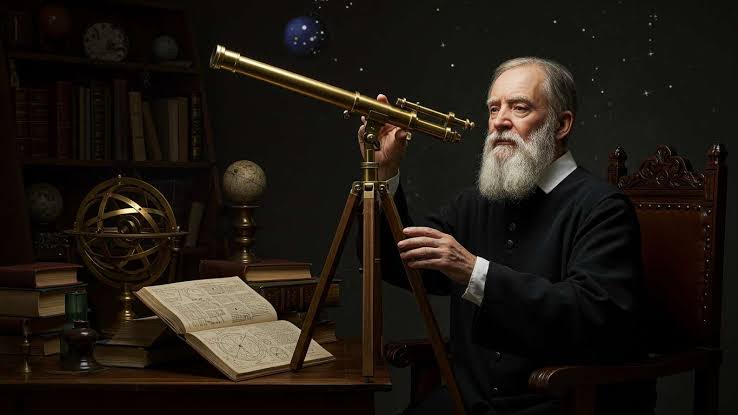
With a telescope he built and improved, Galileo observed the stars of the Milky Way, the phases of Venus, the four largest satellites of Jupiter, Saturn's rings, craters on the Moon and sunspots. These observations showed that the heavens were not unchanging and that not everything circled the Earth. He also built an early microscope.
Copernicus and the Church
Galileo's support for Copernican heliocentrism met opposition from within the Catholic Church and from some astronomers. The Roman Inquisition investigated the matter in 1615 and concluded that his opinions contradicted accepted interpretations of the Bible.
The Dialogue and the Trial
Galileo defended his views in the Dialogue Concerning the Two Chief World Systems (1632), which appeared to dispute and satirise Pope Urban VIII and thereby alienated both the Pope and the Jesuits, who had supported him until then. The Inquisition tried him in 1633, found him "vehemently suspect of heresy" and forced him to recant. He spent the rest of his life under house arrest.
Final Years
While under house arrest Galileo wrote Discourses and Mathematical Demonstrations Relating to Two New Sciences (1638), which dealt mainly with kinematics and the strength of materials. He died near Florence on 8 January 1642.
Legacy
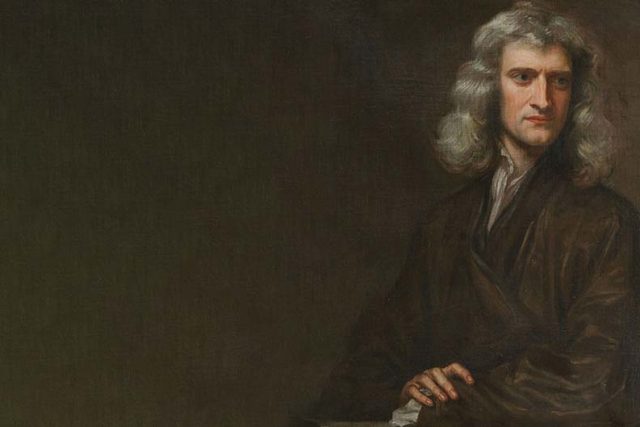
Galileo's habit of testing ideas against observation and describing nature in mathematical terms shaped later scientists, including Isaac Newton, who was born in the year Galileo died. In 1992 the Catholic Church, through Pope John Paul II, acknowledged that errors had been made in handling the case. Space missions have carried his name, including the Galileo probe sent to study Jupiter, and the four large moons he found are still known as the Galilean moons.
Conclusion
Galileo combined observation, mathematics and a willingness to challenge accepted views, and he paid for it with his freedom. His discoveries and his writings on motion helped to open the way to modern science.